Jasmine, a 30-year-old finance professional, was doing a lot of the right stuff: walking 10,000 steps each day, eating what most people would recognise as a healthy diet, and following workouts on YouTube. The problem was what happened when she stopped doing those things perfectly.
“I would have one or two bad days and give up and then start the yo-yo dieting cycle over again,” Jasmine explained. The result was some attempts at fat loss over the years, but nothing that actually stuck. After years of starting and stopping, she was ready to try something different.
This wasn’t just about fat loss, either. Jasmine had recently found out she had high cholesterol, and that was the bigger motivator for her to find an approach that would help her lose fat, improve her health, and build habits she could maintain in the long run.
The setup
Jasmine’s nutrition didn’t need a complete overhaul–she was eating pretty well–but there was still a lot of opportunity to optimise for things like protein and fiber.
On the training side, she’d been following a HIIT-style workout: high intensity, back-to-back exercises, minimal rest. There was a lot of randomness, too, with each week’s workout different from the last.
For the purposes of losing fat and retaining muscle, this approach wasn’t going to work. Strength training isn’t about “burning calories,” it’s there to provide the signal that tells your body to hold on to (and grow) muscle.
Further, constantly changing workouts means you can’t track your progress. Since progressive overload is a key component of muscle gain, the plan needs to follow a consistent week-to-week structure to track progress.
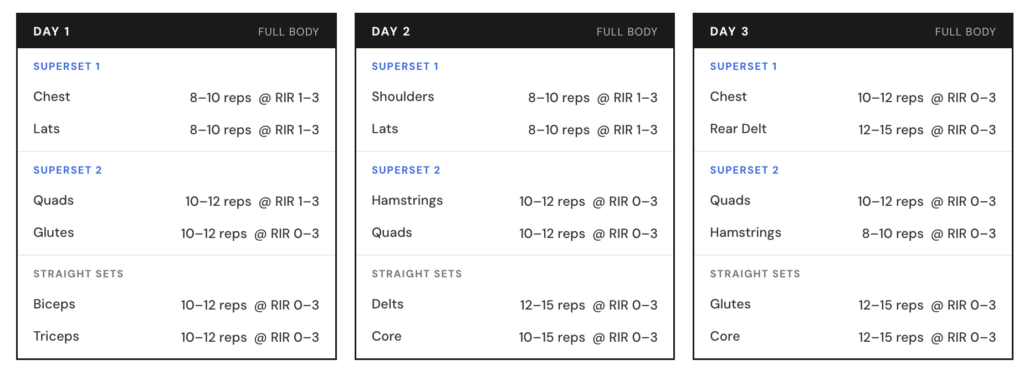
At 5’9” and 213 lbs, her starting nutrition targets worked out to 2000-2200 calories, 120-140g of protein, and 20-30g of fiber. She was already training full-body three days a week, so we kept the same structure but optimised her programming for volume and exercise selection.
Eating more–like, a lot more
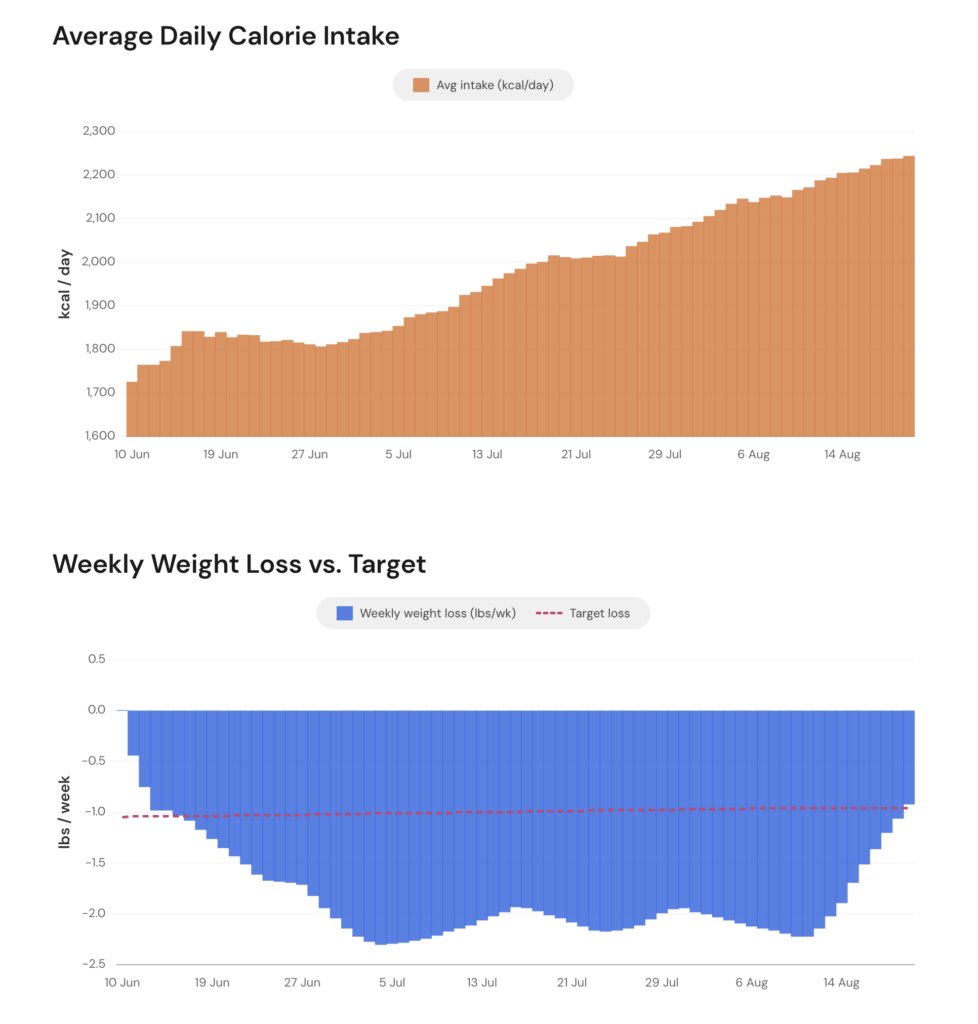
At first, Jasmine was reluctant to eat anywhere near her calorie target. Two thousand calories felt like a lot, especially since her previous fat-loss attempts involved eating significantly less.
So while her target intake was around 2100 calories, she was averaging closer to 1700. This put her in a much steeper deficit than I wanted. The graphs below show her average calorie intake between June and August and her weekly weight loss compared to the target loss over the same timeframe. As the graphs illustrate, there was a stretch of a few weeks where she was losing more than double her target.
But this wild ride ain’t over yet.
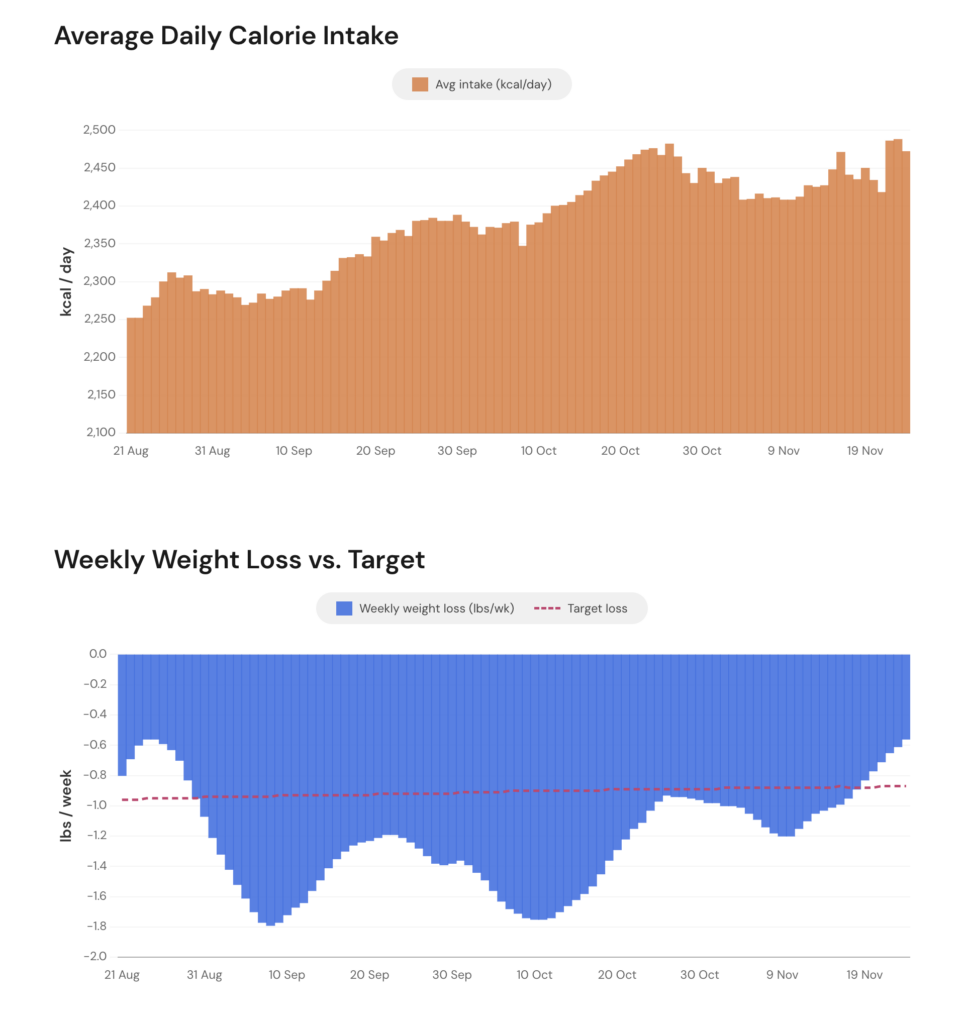
Even after Jasmine managed to get her intake up to around 2100, her weight kept dropping. Very fast. By the time it levelled off, she was targeting around 2300 calories. That did the trick…for about a week or two. Then her weight loss picked up again, and it was back to increasing calories. This time, weight loss didn’t slow down until her target calories reached almost 2500.
If you’re thinking “wtf?”, so was I. I’m glad we’re on the same page. Now, please sit back down because we need to continue.
Alright, fine. I should probably address this because I don’t want people thinking energy balance is a myth. I suspect a few things were going on.
As mentioned above, Jasmine was averaging around 1700 calories at the start of coaching. Her estimated TDEE was around 2700. If we assume the TDEE value was somewhat accurate, she was in a ~1000-calorie deficit. For reference, I wanted her to target a ~600-calorie deficit. So some of the increase in her weight loss was simply due to reducing her caloric deficit. Is the word “deficit” starting to sound weird to you?
On top of that, improving her diet quality likely meant she was ‘losing’ more calories through the thermic effect of food. For instance, her protein intake was around 110 grams pre-coaching and over 130 grams during coaching. Fiber intake followed a similar pattern. Before coaching, it was around 20 grams, and during coaching, it was well over 30 grams. Now, to be clear, this won’t have a huge effect, but it will have an effect.
And there’s also the training factor. For some people, HIIT tends to be more fatiguing, which means you’re less likely to move around as much the rest of the day. The downstream effect is less energy expended over a 24-hour period.
Nonetheless, it doesn’t really matter what the actual reason was. The data showed Jasmine was losing weight faster than planned, so I bumped up her intake accordingly.
Understandably, there was some pushback from Jasmine. She was already reluctant to increase her intake to ~2100, and there I am telling her she needs to eat even more.
As I explained to her, the goal isn’t to lose weight as fast as possible–I wanted her to lose fat at a rate that balanced progress with minimal impact on hunger, performance, mood, and energy.
As Jasmine said, “I know increasing the calories was meant to slow down my rate of loss, and it looks like that did the trick. I won’t lie, though, it was a little hard for me to see the arrow pointing up — but I am trying to remind myself that this is what we wanted to happen.”
Jasmine’s results
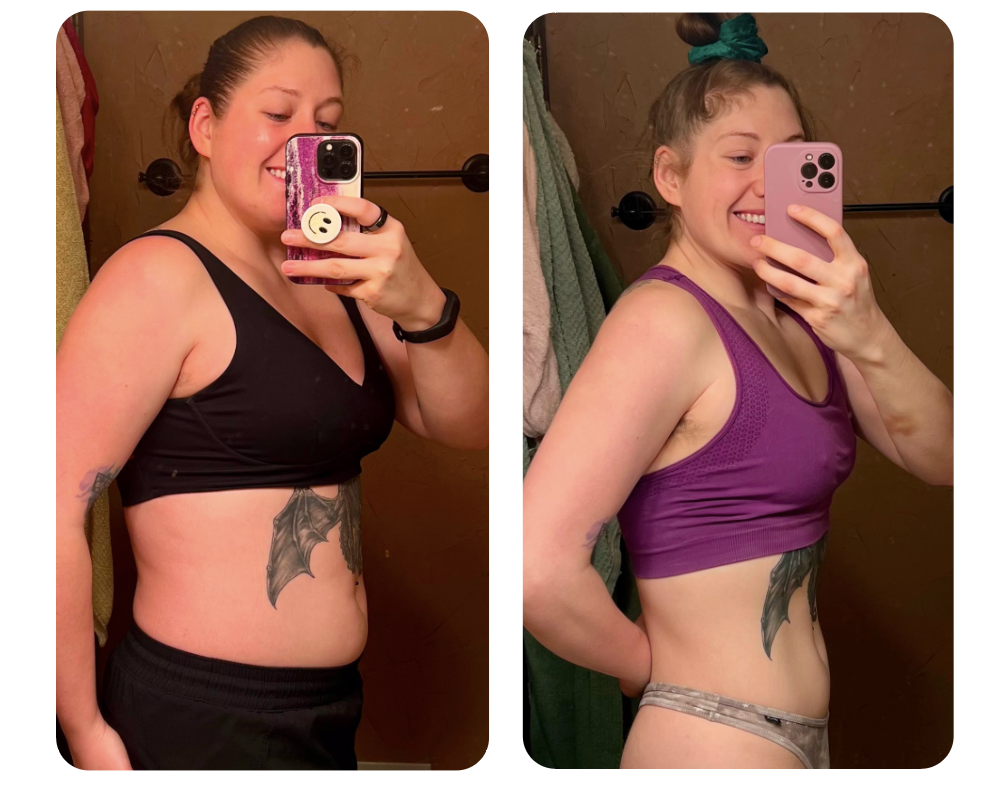
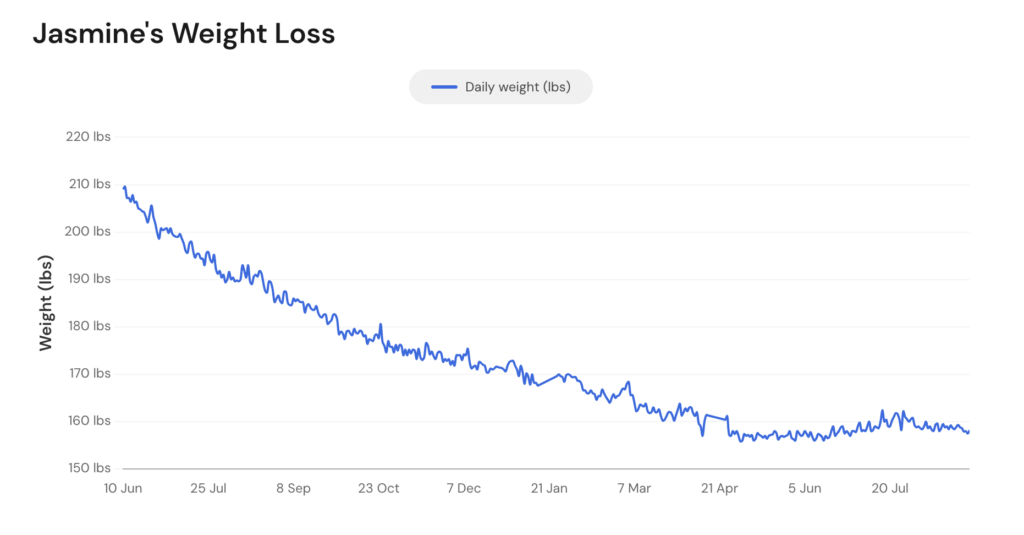
Over the course of a year, Jasmine lost 52 lbs. Her waist shrank by 6.5”, and she hit, then surpassed, her push-up goal, getting to 6 full-body push-ups for three sets.
Moving to maintenance
After the fat loss phase, the goal shifted to maintenance. We were able to establish her new maintenance within two weeks and then continued to adjust based on her weight trend. Generally, if a client’s weight is within 1–2 lbs of their target, no adjustment is needed.
(A quick note on ‘target weight’: this refers to your weight once it’s stabilised after the initial calorie increase. So if you ended a diet at 150 lbs and your weight settled at 152 lbs after moving to maintenance calories, that 152 lbs is your target maintenance weight.)
Over the first month, her calories went from roughly 2,000 to 2,200 a day, and her trend weight moved from 157 lbs to around 158 lbs.
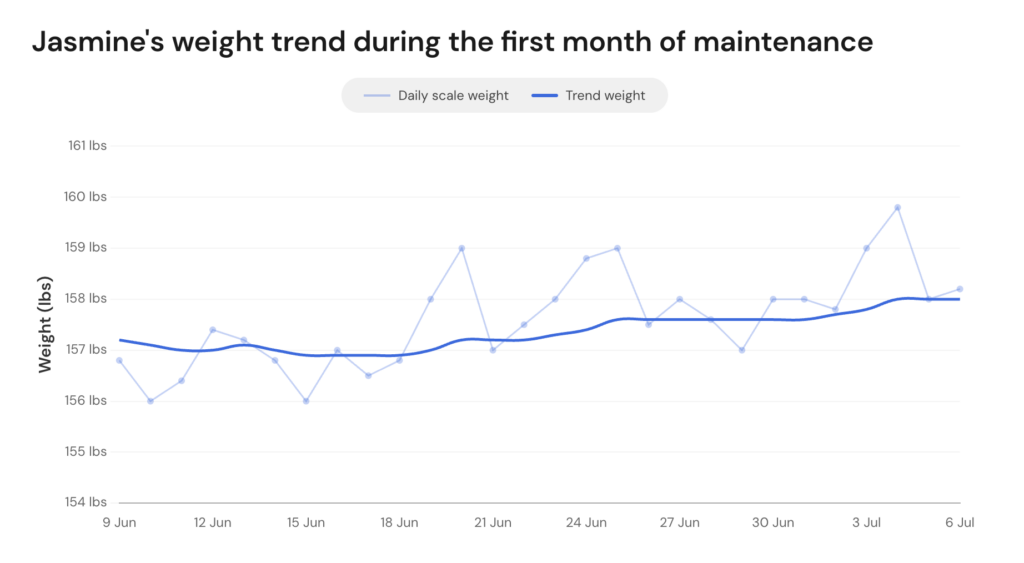
Scale weight was more volatile during this time, which is completely normal, since more food means more glycogen and water, and increased gut content. Another variable was Jasmine’s period–it artificially inflated her weight a bit, but we didn’t panic and cut her calories. Instead, we just waited it out, and her scale weight eventually stabilised.
When you read Jasmine’s story, it can almost seem too easy. That downward trend on her weight graph seems inevitable in hindsight. In reality, Jasmine’s journey was punctuated by small wins and mindset shifts that built on one another.
To highlight a few:
Three months in, Jasmine wrote: “Training is going so well. I am amazed at my ability to stay consistent and not miss a workout. I actually look forward to them very much!” — not bad for someone who came into coaching struggling with training consistency.
A few months later, she ordered new clothes and accidentally bought them all in her old size. Her reaction: “WAY too big already? That’s neat.”
By the halfway point, she pointed out how habitual everything was becoming–“It’s almost like this is just becoming my regular life, huh?”
But not every week was like this. Somewhere around the five-month mark, Jasmine went out and got back late. When she tracked her food the next day, she realised she’d gone considerably over her targets, and felt the familiar pull of guilt that had derailed her so many times before. Emailing me the next day, she said, “I know I should not feel bad about this but…I did not track [the food] until after and felt some regret, but overall, it looks like I still averaged where I should be calorically.” Old Jasmine would have let that moment derail her. Present Jasmine looked at her weekly intake and realised she was still on track.
Oh, and remember her high cholesterol? Jasmine had a follow-up biometric screening done three months into coaching, and found that her cholesterol levels “are so much more improved!!!”
After over a year of coaching, Jasmine’s biggest takeaway wasn’t the “perfect macro split” or the most “optimal” training plan; it was this: “It’s okay to not be perfect, and consistency is your friend!”
“[Coaching] has taught me not only how to reach my goals but also how to live a balanced life without restriction. I find myself in my thirties with the strongest body I have ever had.”
Interested in coaching?
You can learn more about how coaching works and apply here.
Thanks for reading. If you enjoyed this, you’d love the Vitamin
95% of my new content is only sent to my email list. One email every Thursday, filled with actionable, evidence-based fitness advice to help you with your goals. If you enjoyed this, you’ll love my emails.
Subscribe for free below or Learn more about the Vitamin