Collagen is so hot right now. Worldwide Google searches for collagen have surged over the last decade, alongside a booming supplement market promising everything from younger-looking skin to healthier joints and stronger tendons.
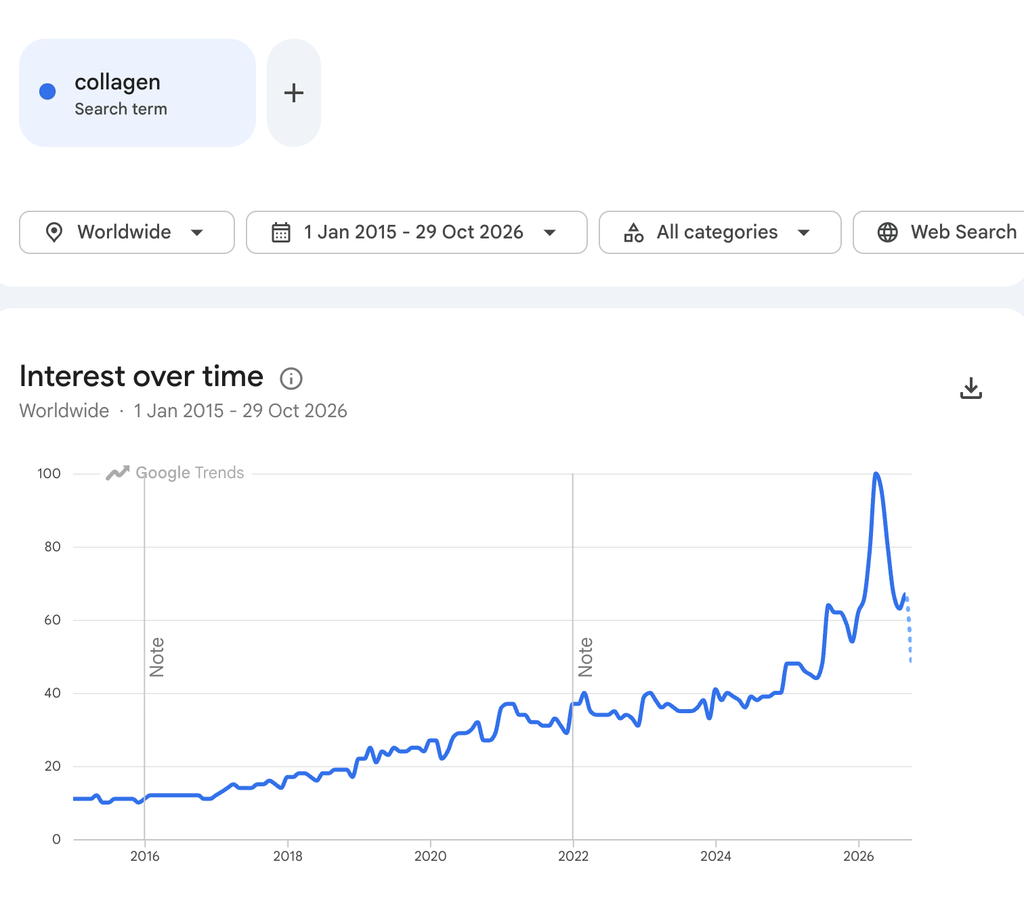
To understand the hype, it probably helps to understand what collagen actually is.
Despite the name, collagen isn’t one thing, but a family of proteins found throughout your body. Together, they make up roughly 25–30% of your body’s protein and are major components of your skin, tendons, bones, and cartilage. While there are at least 28 different types, two are particularly relevant here:
- Type I: found mainly in skin, tendons, and bones
- Type II: found mainly in cartilage
One way to think of collagen is like the biological glue that holds your body together so you don’t collapse into a big ol’ human puddle. More specifically, it helps tendons transfer force from muscles to bone, gives skin strength and firmness, and, alongside minerals, helps make bones less brittle and more fracture-resistant (among other things). 1
If you’ve ever bought collagen powder and checked the label, you’ve probably seen the words hydrolysed collagen (or collagen peptides), which basically means the long chains of amino acids that make up collagen have already been chopped up into shorter chains called peptides. You might also see undenatured type II collagen on a joint supplement label, which, as you can probably guess from the name, just means it retains its original shape.
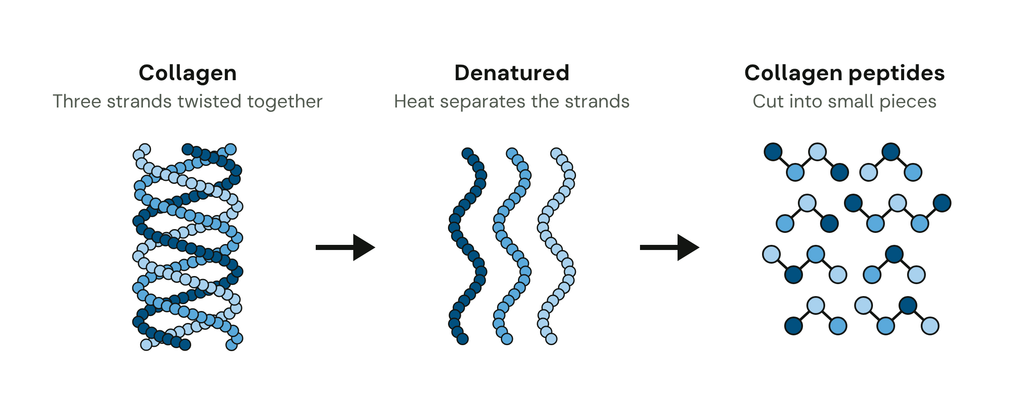
Don’t worry, I haven’t strayed off topic. The above matters because while some of those peptides are absorbed into your bloodstream, that doesn’t tell us whether collagen actually does anything once it’s in your body. Does it really lead to healthier joints, stronger tendons, or younger-looking skin?
Well, let’s see. Since collagen is a protein, let’s start with muscle growth.
Collagen and muscle growth
Of the 20 common amino acids, nine are essential, meaning your body can’t produce them and must get them from your diet. The remaining 11 are considered non-essential because your body can produce them. To create new muscle protein, all the amino acids must be present in adequate amounts (especially the essential amino acids).
Collagen is rich in non-essential amino acids like proline and glycine but low in essential amino acids like methionine and leucine, and it lacks tryptophan entirely. For example, collagen has a Digestible Indispensable Amino Acid Score (DIAAS) — a method used to rank the quality of different protein sources — of zero. By comparison, whey protein has a DIAAS of 1.09.
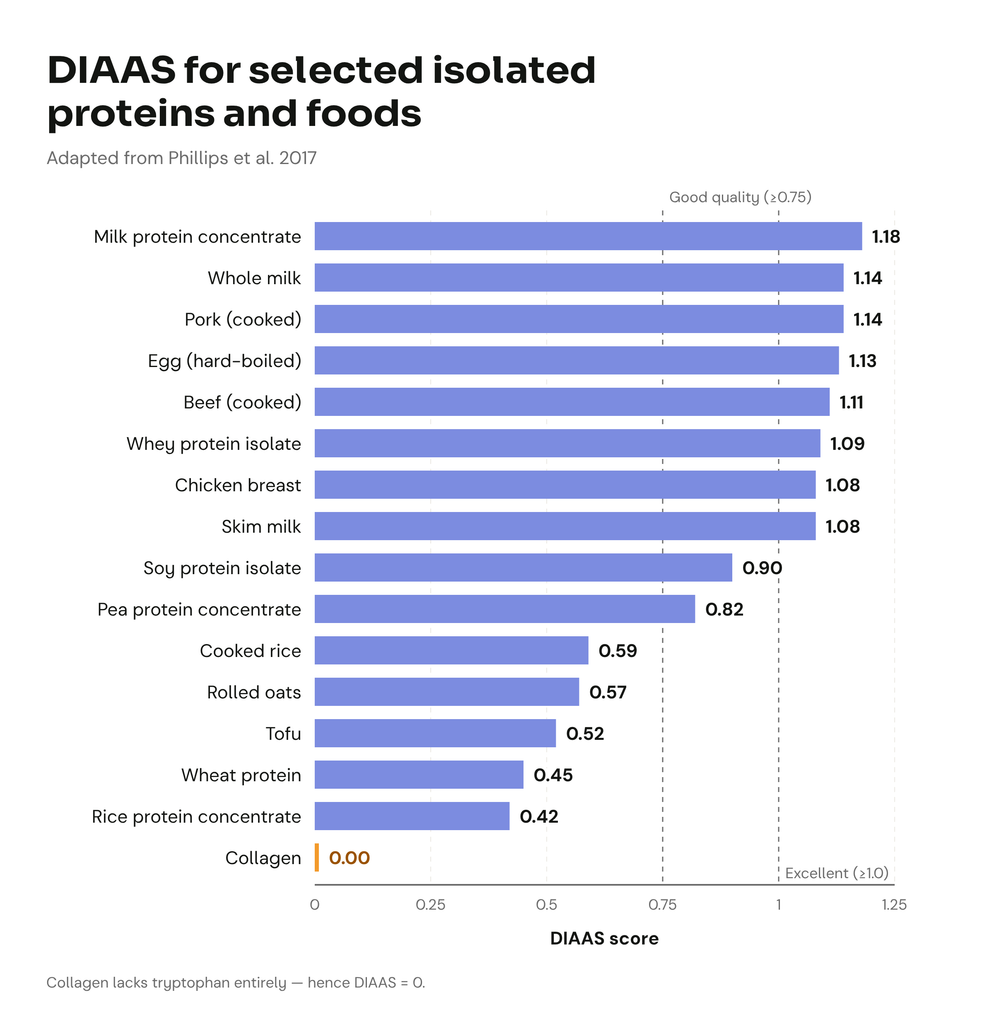
Despite this, some studies have found collagen supplementation can increase muscle and strength compared with a placebo. This shouldn’t be that surprising. If one group receives protein while the other doesn’t, you can expect the protein group to gain muscle, especially if they’re already undereating protein.
Another study that directly measured muscle growth noted that the increase in fat-free mass observed in the collagen group was likely due to increased connective tissue (not muscle tissue).
But even if collagen increases muscle growth compared with a placebo, that doesn’t tell us whether it’s a good protein source for building muscle. For that, we need to compare it with a higher-quality protein, like whey.
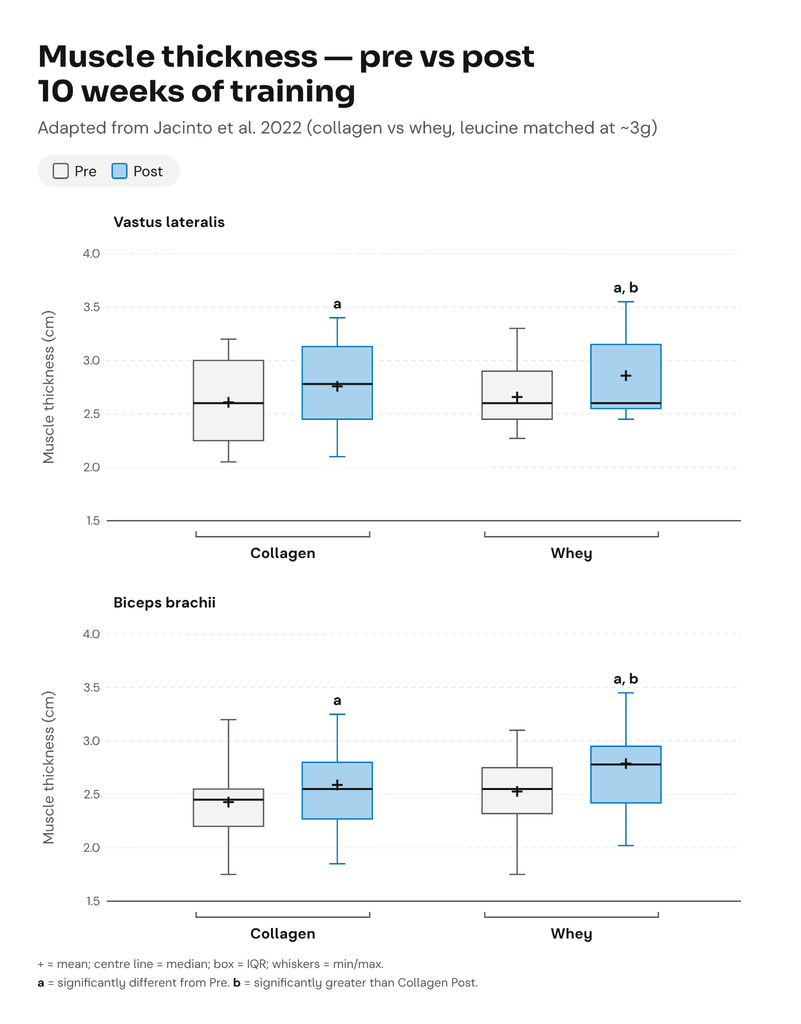
Fortunately, there is research looking at this. For example, this 2022 randomised trial had 22 participants complete 10 weeks of resistance training while supplementing with either 35g of whey or 35g of collagen with added leucine. The whey group experienced greater increases in muscle thickness: 8.4% versus 5.6% in the thigh, and 10.1% versus 6% in the biceps. The groups showed no significant differences in strength or power.
Since then, more research has examined collagen and muscle growth. In a 2023 randomised trial, 45 recreational athletes (15 female) consumed whey protein, collagen, or a placebo after six sets of barbell squats. In the five hours after training, whey protein increased muscle protein synthesis (the fancy name for the process of building muscle), while collagen didn’t do better than the placebo. Notably, even when looking at muscle connective protein synthesis, collagen didn’t produce a clear benefit compared to the placebo.
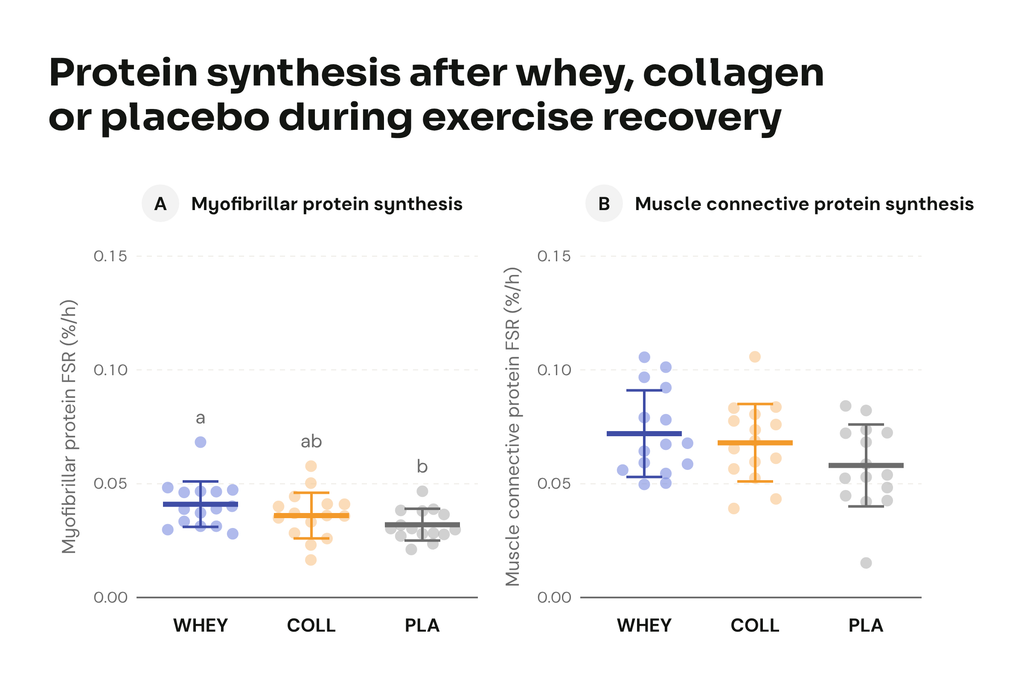
All said, if you want to gain (or retain) muscle, there’s no reason to use collagen over a higher-quality protein source like whey.
But your muscles aren’t the only tissues involved when you lift weights.
Does collagen help your tendons?
Imagine you’re in the gym, about to do a heavy set of squats. As you push up from the bottom, your muscles generate force to move the weight, but it’s your tendons that transfer that force from your muscles to your bones. Beyond force transfer, they also stretch and recoil, storing and releasing energy as we move.
How tendons respond to these forces depends, in part, on their physical properties. When researchers investigate whether collagen supplements improve tendon adaptations, they’re generally interested in two things:
- Tendon thickness: Exactly what it sounds like — how ‘thick’ the tendon is.
- Stiffness: How much a tendon resists stretching under load.
In theory, thicker, stiffer tendons could withstand greater forces and reduce injury risk. Considering that collagen makes up roughly 60–85% of a tendon’s dry mass, it’s reasonable to wonder whether collagen supplements could improve these adaptations beyond what training alone achieves.
A 2024 systematic review and meta-analysis found that collagen supplementation might improve tendon thickness when combined with training, but it showed no clear additional benefit for tendon stiffness. Additionally, the researchers rated the evidence for tendon adaptations as very low certainty (i.e., don’t get too excited).
In contrast, a 2026 systematic review concluded there was “strong evidence” that collagen supplements improve tendon size and stiffness when combined with resistance training, but I’m not so sure.
For starters, although the review included eight studies, only four were included in their analysis of tendon size and stiffness. Of those, three found additional improvements in tendon size with collagen, while only two found benefits for tendon stiffness.
Second, the review overlooked a relevant study that challenged its conclusions.
Balshaw and colleagues published two papers from the same trial involving 39 men who completed 15 weeks of resistance training while taking either 15g of collagen daily or a placebo.
In the first, they investigated collagen supplementation and its effect on muscular adaptations. In the second, they looked at whether daily supplementation with 15g of collagen could increase patellar tendon thickness and stiffness.
The tendon paper found no additional benefits from collagen. Patellar tendon stiffness increased by approximately 17% in the collagen group and 21% in the placebo group, with no significant difference between them. In other words, both groups developed stiffer tendons through training, and adding collagen provided no additional benefit.
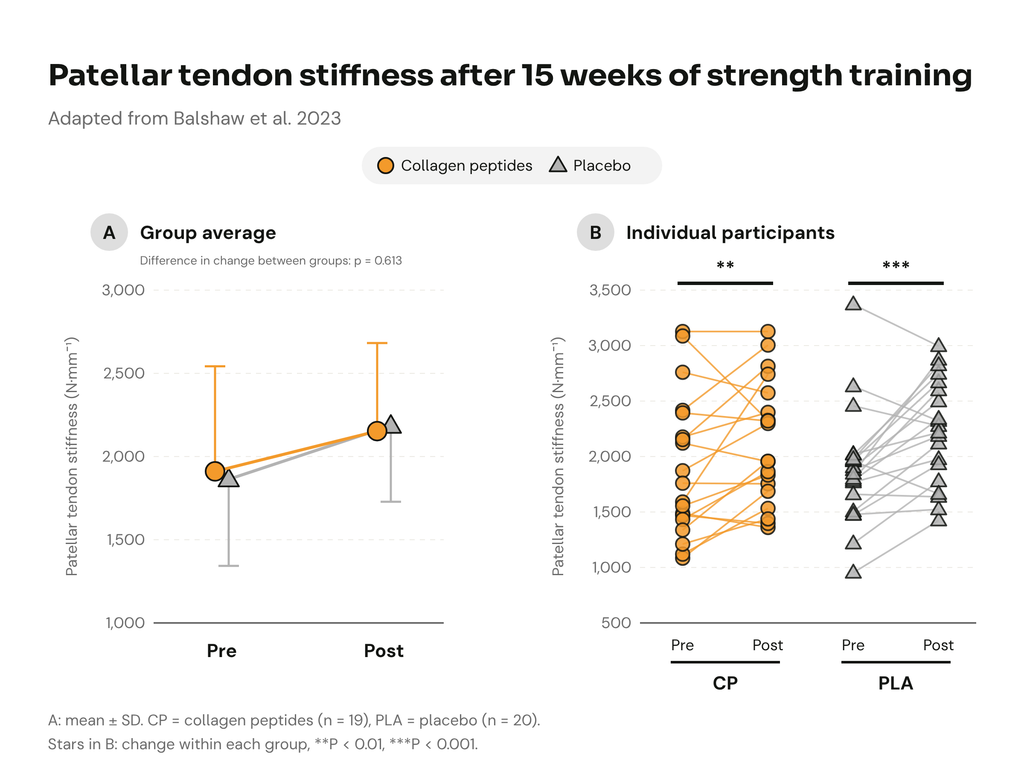
What’s particularly odd is that the authors of the 2026 review included the muscle-growth study but not the tendon study, even though the latter met the review’s stated inclusion criteria.
To be clear, overlooking one study doesn’t automatically invalidate the entire review. But it’s hard to justify a “strong evidence” conclusion when only two small studies found additional improvements in tendon stiffness, two others didn’t, and a larger study reporting no benefit wasn’t included.
Even the injury research is mixed. A 2026 systematic review found some improvements in pain, function, and recovery. However, the studies involved different injuries and treatments, including collagen injections and supplements containing several other ingredients. Some didn’t even have a placebo group.
This makes it hard to tell whether any improvements were due to collagen alone, collagen combined with another ingredient or treatment, a specific type or dose of collagen, or whether it had any effect at all.
For example, collagen injections may help while oral collagen doesn’t, or taking collagen with vitamin C may work better than collagen alone. If someone is selling you a collagen supplement but the research they use to support their product was done with a different type of collagen, dose, or ingredient combination, you shouldn’t assume their product will provide the same benefit (and that’s assuming collagen was responsible for the improvements in the first place).
So, could collagen improve certain tendon adaptations? Possibly. But I wouldn’t feel confident recommending collagen for the ostensible tendon benefits based on the research that’s currently available.
What about joint health and pain?
The evidence is a bit stronger here, particularly for people with osteoarthritis.
A 2025 meta-analysis looked at the effect of collagen supplementation on knee osteoarthritis symptoms.
Pain was assessed on a 100-point scale, where 0 meant no pain, and 100 meant the pain you feel stepping on a Lego. Across five trials, collagen supplementation produced an average of 13.6 points more pain relief than placebo.
However, the results varied considerably between studies. For example, two small comparisons from the same trial reported about 30 additional points of pain relief, while a larger study using the same collagen dose found less than 5 points.
A larger 2024 meta-analysis reached a similar conclusion. In their main analysis, collagen-based treatments reduced pain by an average of 8.5 points on a 100-point scale compared with controls. Importantly, collagen still showed a benefit when the researchers restricted their analysis to studies with lower risk of bias. So the added benefit of taking collagen alongside their existing treatment was small, but it could still matter for someone dealing with persistent joint pain.
Beyond osteoarthritis, a 2021 systematic review identified five small trials investigating joint pain, function, and injury rehabilitation. These included athletes with activity-related knee pain, people with chronic ankle instability, and people with Achilles tendinopathy.
All five studies reported some benefits, including reduced pain and improved joint function. However, the trials were relatively small and tested different types and doses of collagen in people with varying joint problems, making the results less generalisable.
Nonetheless, collagen may help reduce joint pain, particularly in people with osteoarthritis. Considering collagen supplements are generally well tolerated, they might be worth trying alongside other strategies such as managing training loads and physiotherapy.
Collagen for healthier, younger skin?
Ask most people what collagen supplements are good for, and there’s a very good chance they’ll mention skin. Some might even point to studies to support their argument, and they wouldn’t be wrong. Numerous studies have reported improvements in skin hydration, elasticity, and even wrinkles after collagen supplementation.
For example, a 2024 randomised trial showed that 12 weeks of collagen supplementation improved skin hydration, elasticity, and wrinkles, and even the appearance of collagen fibres in the skin’s deeper layers. While this is a promising finding, the manufacturer funded the study, and four of the five authors worked for the company. That doesn’t mean anything shady’s going on, but it’s hard to ignore the elephant in the room when evidence suggests manufacturer-sponsored studies are more likely to report positive outcomes than non-industry-funded studies.
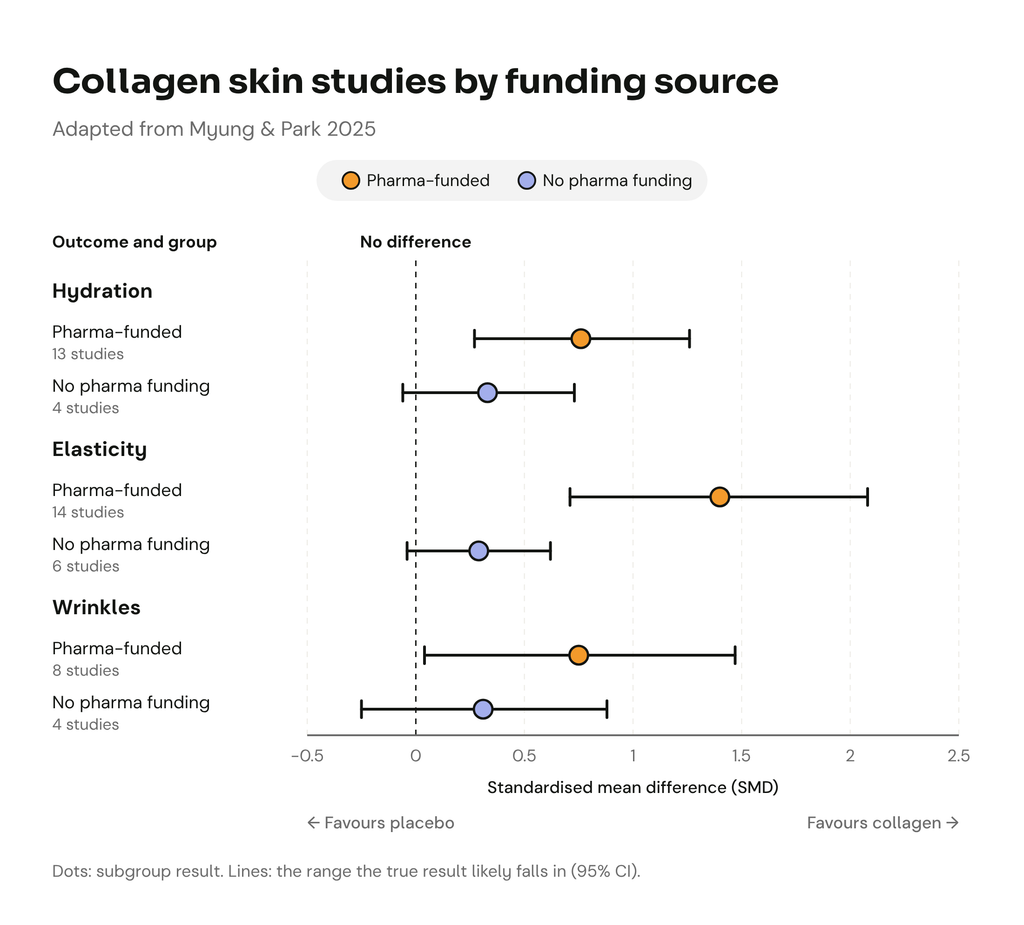
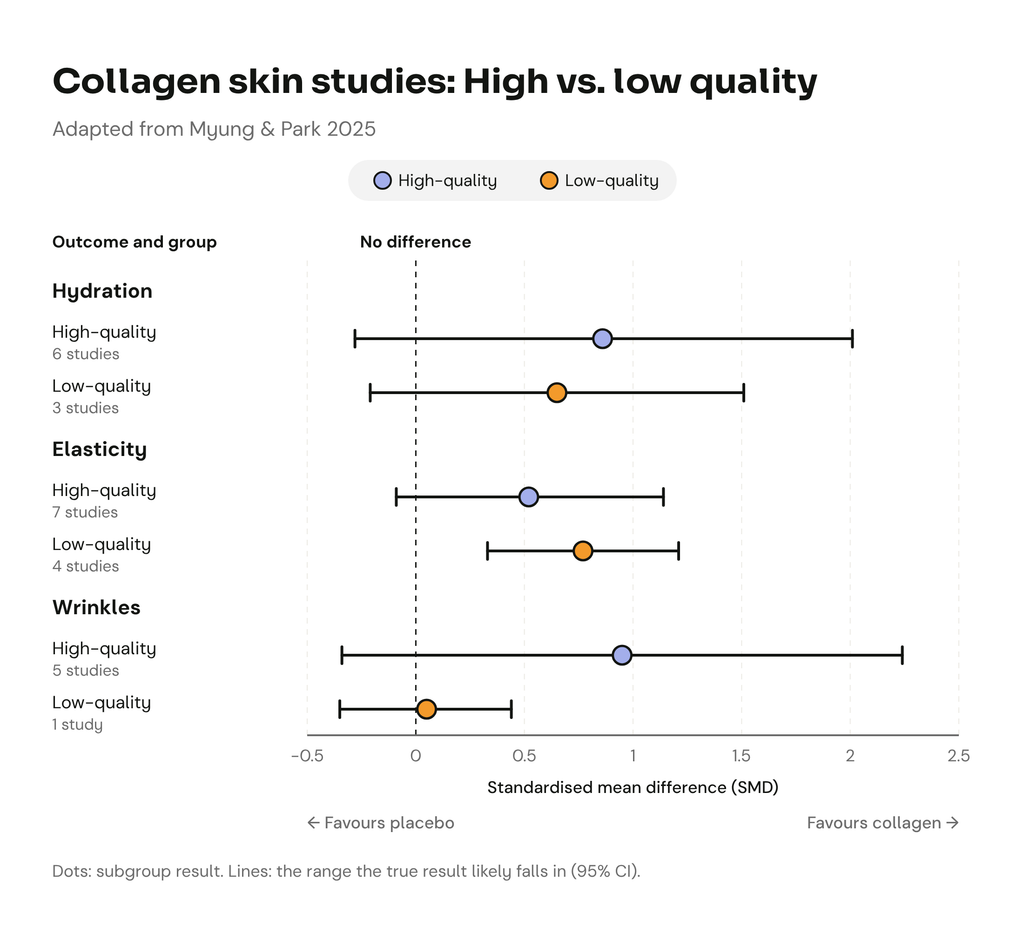
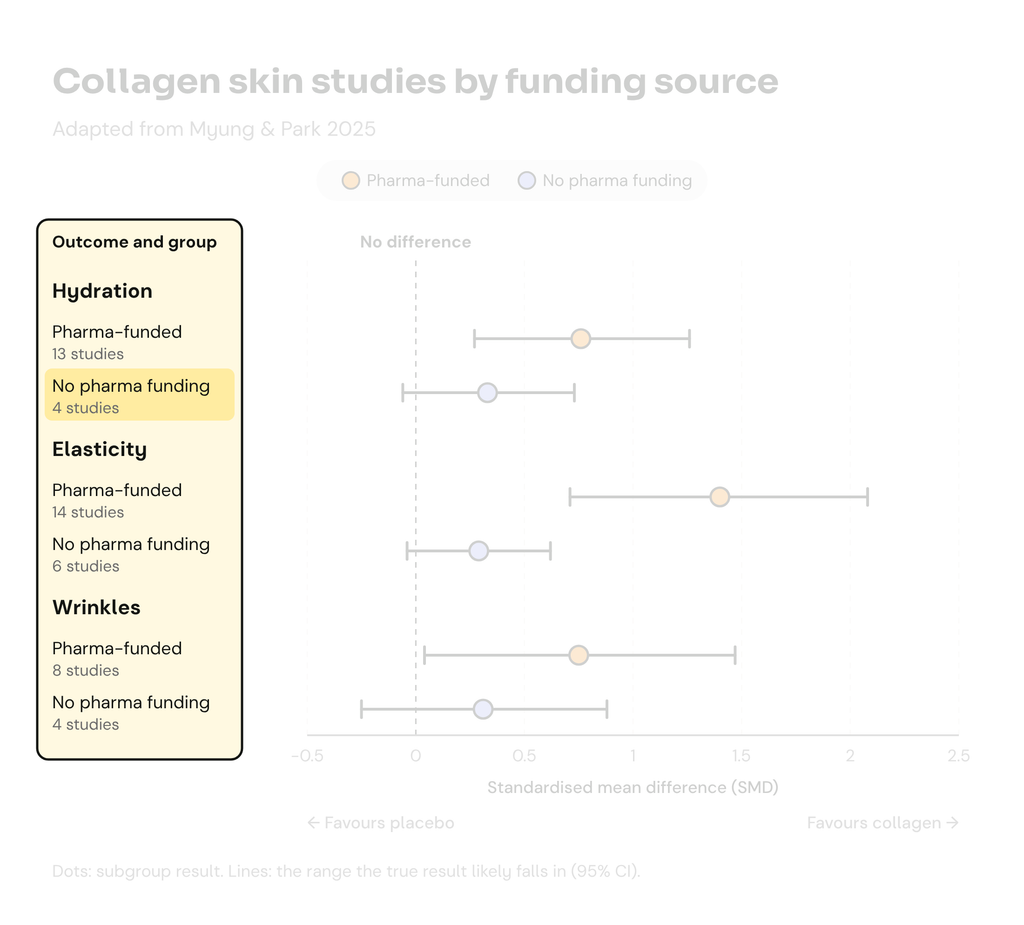
Here’s an example: A 2025 meta-analysis of collagen skin trials found that “collagen supplements significantly improved skin hydration, elasticity, and wrinkles.” But when researchers examined funding sources and study quality, the results weren’t that clear-cut.
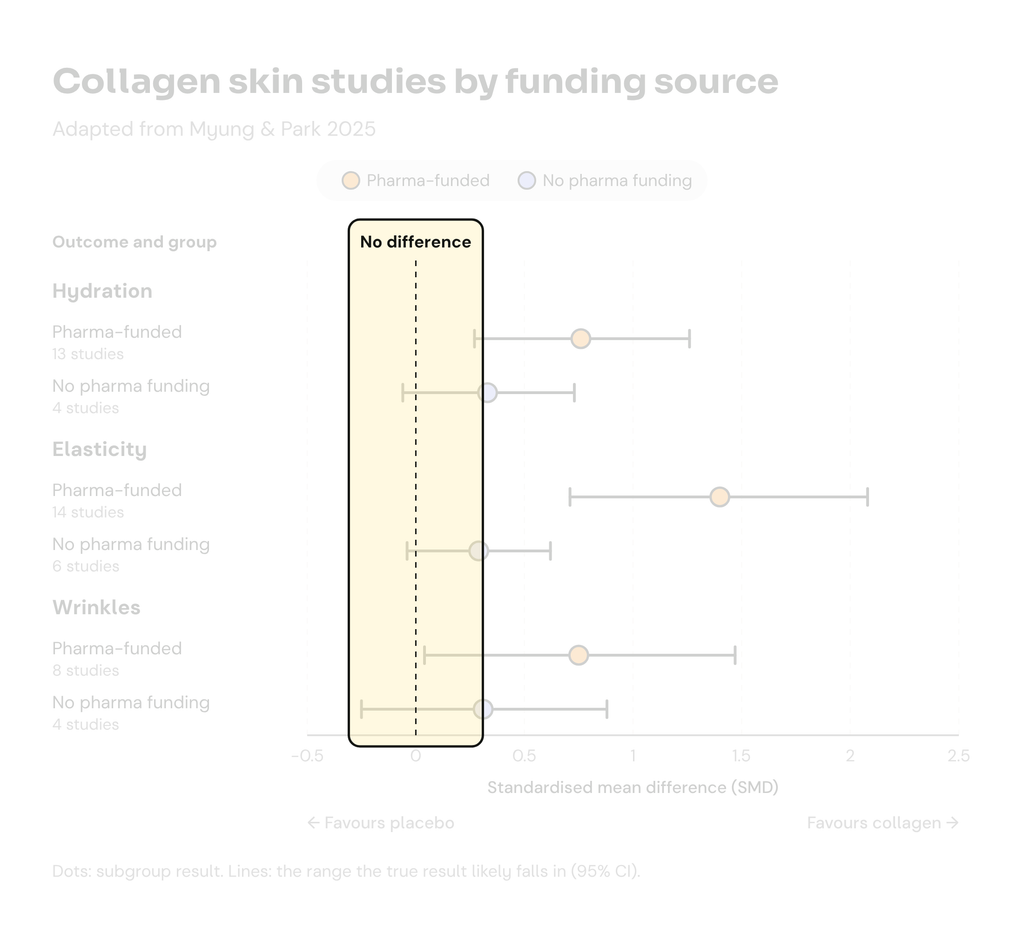
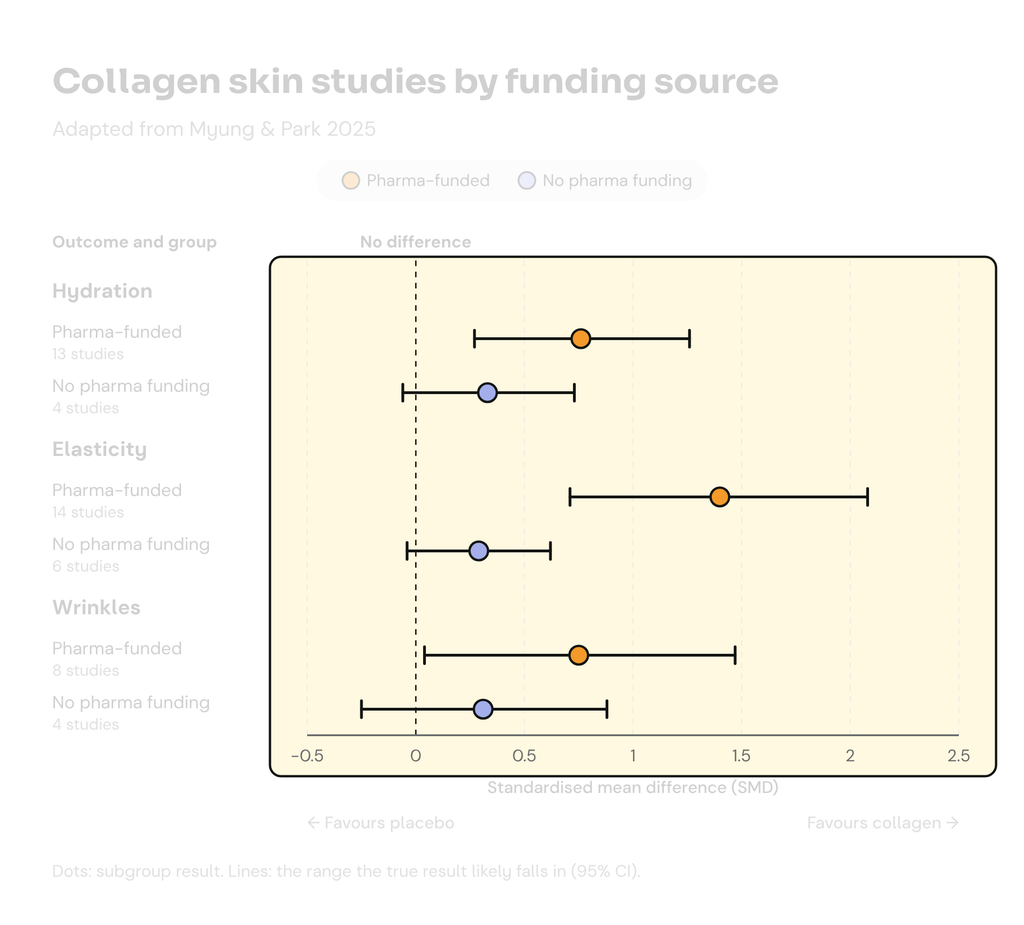
Industry-funded studies showed statistically significant benefits across all three outcomes, while non-industry-funded studies didn’t. Similarly, higher-quality studies showed no statistically significant improvements, while lower-quality studies only showed a significant improvement in elasticity.
However, if you look at the forest plots below, you’ll notice that both non-industry-funded and higher-quality studies still leaned toward favouring collagen.
We’re going to get a bit nerdy for a second, but only because it’s important to understand what this actually means.
First, let’s get you up to speed with what you’re actually looking at.
On the left of the image, you’ll see what the researchers measured and how many studies contributed to each result. For example, four studies without industry funding looked at collagen’s effect on skin hydration.
Now, if you look to the right of that section, you’ll see the dashed vertical line labelled “No difference.” This represents the point where there’s no difference between collagen and placebo.
Next, you’ll see the coloured dots. Each dot is the best estimate of collagen’s effect compared with placebo after combining the studies for the outcome. But it’s an estimate, and estimates come with a degree of uncertainty. And that uncertainty is represented by the horizontal line running through the dots.
Finally, look at the blue dots that represent studies without industry funding. Although the dots favour collagen, every horizontal line crosses the dashed “no difference” line. So, while the best estimates favour collagen, there’s too much uncertainty around those estimates to confidently say whether collagen actually provides a benefit.
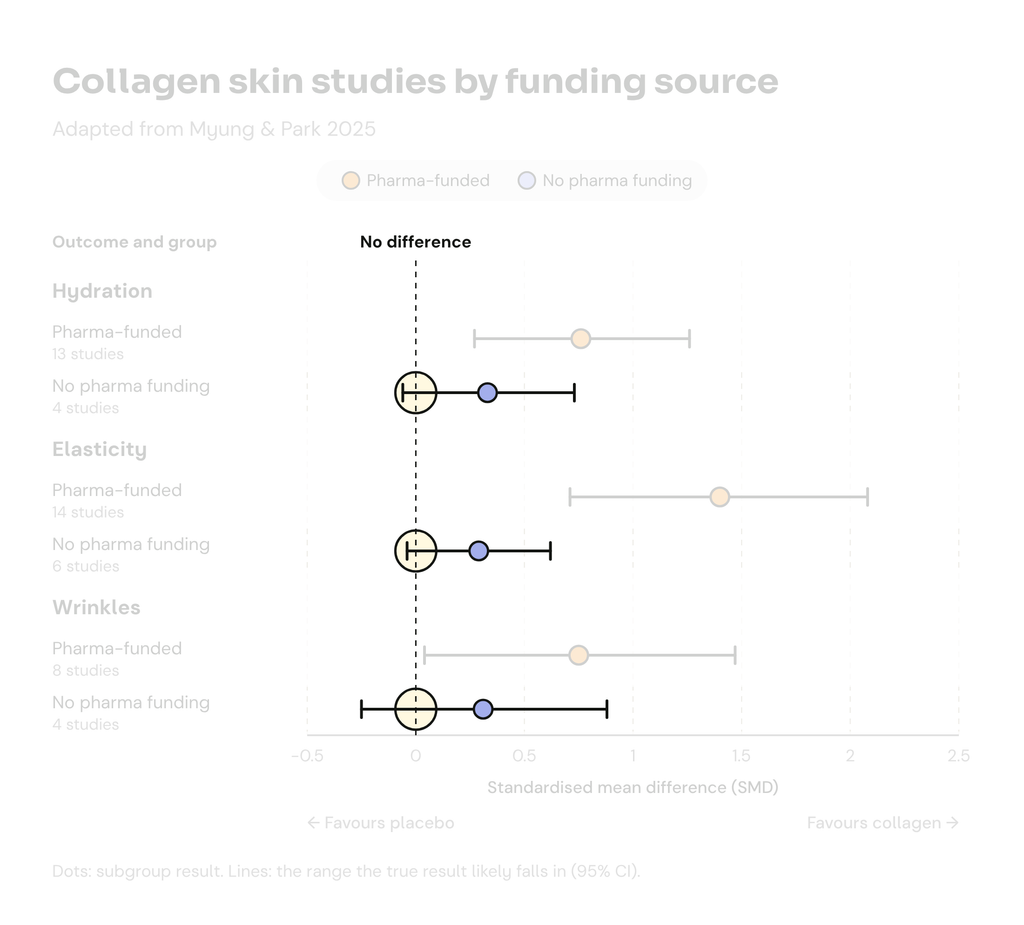
That’s what makes the skin research so messy. The industry-funded research seems to strongly favour collagen, while the independent studies boil down to, “Eh, collagen might help, but we can’t say for sure and we need more independent research.”
I mention all of this because when a study finds “no statistically significant improvements”, that doesn’t mean there’s no effect; it means there isn’t enough conclusive evidence to say either way.
This leads into another point that’s often overlooked. Do you care about a study finding a ‘statistically significant’ result, or whether that result makes a meaningful difference to your skin? I’m going to assume the latter, and while these may sound like the same thing, they’re not.
For example, lab research suggests that certain collagen peptides can stimulate fibroblasts (the cells that produce collagen in your skin), which increases their production of hyaluronic acid (a substance that helps skin retain moisture). Does that mean taking collagen will give you fewer wrinkles and a more youthful appearance? Maybe. Maybe not.
Here’s an example. A recent study found statistically significant improvements in skin elasticity after 12 weeks of collagen supplementation. To measure this, they used a device called a Cutometer. The Cutometer gently pulls on the skin and measures how well it returns to its original shape, and the results are expressed as a score between 0 and 1. The higher the score, the better.
Overall skin elasticity increased from 0.69 to 0.74 in the collagen group, compared with 0.69 to 0.70 in the placebo group. In other words, collagen produced an additional 0.04-point improvement. Now, that result was ‘statistically significant’, but would it translate to noticeably firmer skin? Who knows.
Even the researchers acknowledged that, despite finding statistically significant improvements in elasticity and several wrinkle measurements, their results were not “translatable to clinical appearance.”
Speaking of appearance, some studies have assessed changes in skin appearance more directly. For example, a 2025 randomised trial had two independent evaluators grade participants’ wrinkles from photographs. After eight weeks, average wrinkle scores had fallen by about a quarter of a point in the collagen group, while the placebo group’s scores stayed the same. 2
Not all studies have found visual improvements, though. In a 2026 trial, researchers randomly assigned 140 adults with ‘crow’s feet’ to drink either a supplement containing 5 g of collagen peptides, vitamin E and glutathione, or a placebo every day for 12 weeks. Five independent evaluators graded the participants’ photos without knowing which group took collagen and found no clear difference between the groups.
But it gets more interesting. The researchers also asked both groups to rate improvements in their own skin in areas like youthfulness, firmness, elasticity, smoothness, and wrinkle appearance. The image below is my own visual of the participants’ average ratings for those areas from Table 6 in the paper.
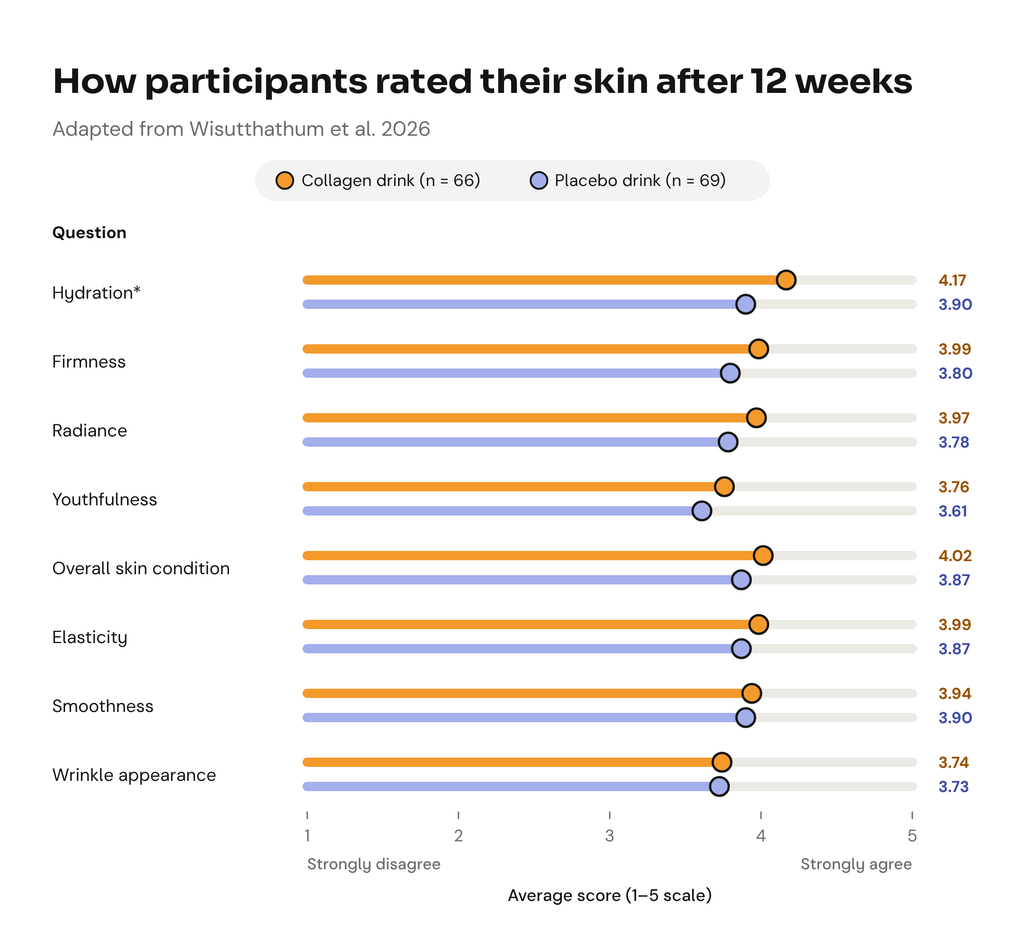
The first thing to note is that both groups reported improvements in their skin, even though half took a placebo. Second, skin hydration was the only question in which the difference between the groups’ self-reported improvement was statistically significant. But when researchers measured skin hydration, both groups showed improvements, with no difference between them.
So if you start supplementing with collagen and your skin starts looking better, maybe it was the collagen. Or, maybe, you just placeboed yourself.
When we take all of this together, you can (hopefully) see just how messy the collagen-skin research is. On one hand, we have industry-funded research favouring collagen, while independent research is less clear. Even if you look past that, you have to question how big an effect you can expect to see. And if you do see an improvement, how much of that was down to the collagen itself, and how much was simply because you expected it to work? Like I said, messy.
Could collagen benefit skin health? Maybe. Do I think we can confidently claim it does? No. Should you take collagen for skin? Well, you probably don’t want to take skin care advice from the guy who can’t remember the last time he moisturised, so let’s start wrapping this up.
So where does that leave us?
A few years ago, I wrote an article on collagen that looked specifically at whether it could be effective for muscle growth. Near the end, I briefly covered some of the research on collagen’s other purported benefits. My general view at the time was basically *shrug*— who knows? Try it if you want, but don’t get your hopes up.
Four years on, I still feel the same way, but with a whole lot more skepticism. The biggest problem is that a lot of the research just isn’t very good.
To be clear, I’m not suggesting collagen is useless or has no benefit whatsoever. Better research could be published and prove collagen is just as amazing as the internet claims. However, it’s probably a good idea not to base what you do (or don’t do) today on a hypothetical future. Right now, I’m not convinced the benefits are anywhere near as sexy as the marketing claims.
For muscle growth, you’re better off consuming a higher-quality protein like whey. And if you want stronger tendons, I’d prioritise resistance training, which has much stronger evidence behind it than collagen supplementation alone.
For joint pain, research on collagen is more promising, but better-established treatments have stronger evidence. For example, strengthening exercises and modifying activities that aggravate pain. And for people with osteoarthritis, regular exercise and losing weight if they’re overweight can help reduce pain and improve function.
For skin, I’d want to see more independent research before I’d spend money on it. In the meantime, regular sunscreen use seems like a good option.
Ultimately, here’s where I stand with collagen: Take it if you want. It’s generally safe and may offer some benefits. But if you’re worried you’re missing out on something by not taking collagen, you probably aren’t.
Thanks for reading. If you enjoyed this, you’d love the Vitamin
95% of my new content is only sent to my email list. One email every Thursday, filled with actionable, evidence-based fitness advice to help you with your goals. If you enjoyed this, you’ll love my emails.
Subscribe for free below or Learn more about the Vitamin