This week: Holiday weight gain is a real phenomenon, and most people gain 1-2 pounds during this time of year, with some of that weight hanging around after the holidays end. But it’s not all bad news – research also suggests it’s not inevitable. Today, we’ll explore what the research has to say about holiday weight gain and what you can do to stay on track with your goals.
There’s no denying there’s something magical about this time of year––it’s a time for family, celebration, giving, and food.
SO. MUCH. FOOD.
From now until January, it’s just one big ‘ol food orgy. Events, social gatherings, more events, more social gatherings.
Unfortunately, the messaging from the fitness world around this time of year tends to swing between two extremes.
On one end, you’ve got the memes telling you how many burpees it takes to burn off Christmas dinner–if my stance on this wasn’t obvious, content like this is capital D dumb, and people who post that type of content can burn in hell.
On the other hand, there are well-meaning reminders to ‘just enjoy the holidays’, which, while nice in theory, also misses the mark.
Sure, a day here and there of eating more than usual won’t harm your progress, but if you go full YOLO over the next few weeks, you will gain weight, some of which will definitely be body fat.
And the research bears this out. Let’s talk about it.
Holiday weight gain: What does the research show?
Yanovski et al. measured body weight in 195 adults between mid-November to early and mid-January. They found participants gained an average of 0.37 kg (0.8 lbs). While participants did lose some weight after the holiday period, the net gain was 0.48 kg (1 lb).
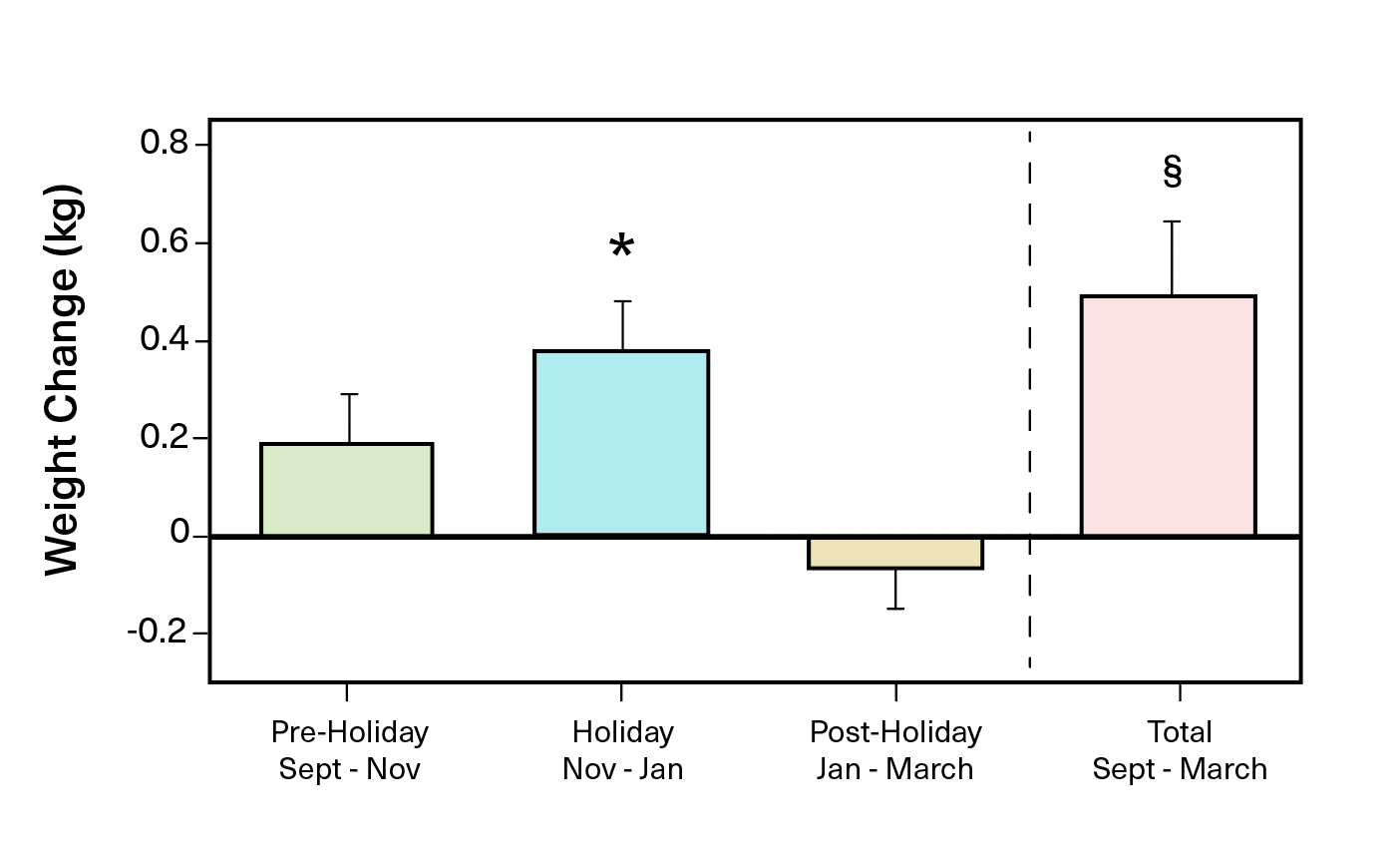
Other studies have found similar trends:
- Rees et al., Reid and Hackett, Cook et al., and Stevenson et al. found an increase of 0.6–0.9 kg (1.3–2 lbs) during the holiday period.
- Helander et al. analysed data from ~2,900 Withings scale users across the USA, Germany, and Japan and found average gains of 0.5 kg, 0.6 kg, and 0.8 kg (1.1 lbs, 1.3 lbs, and 1.7 lbs), respectively.
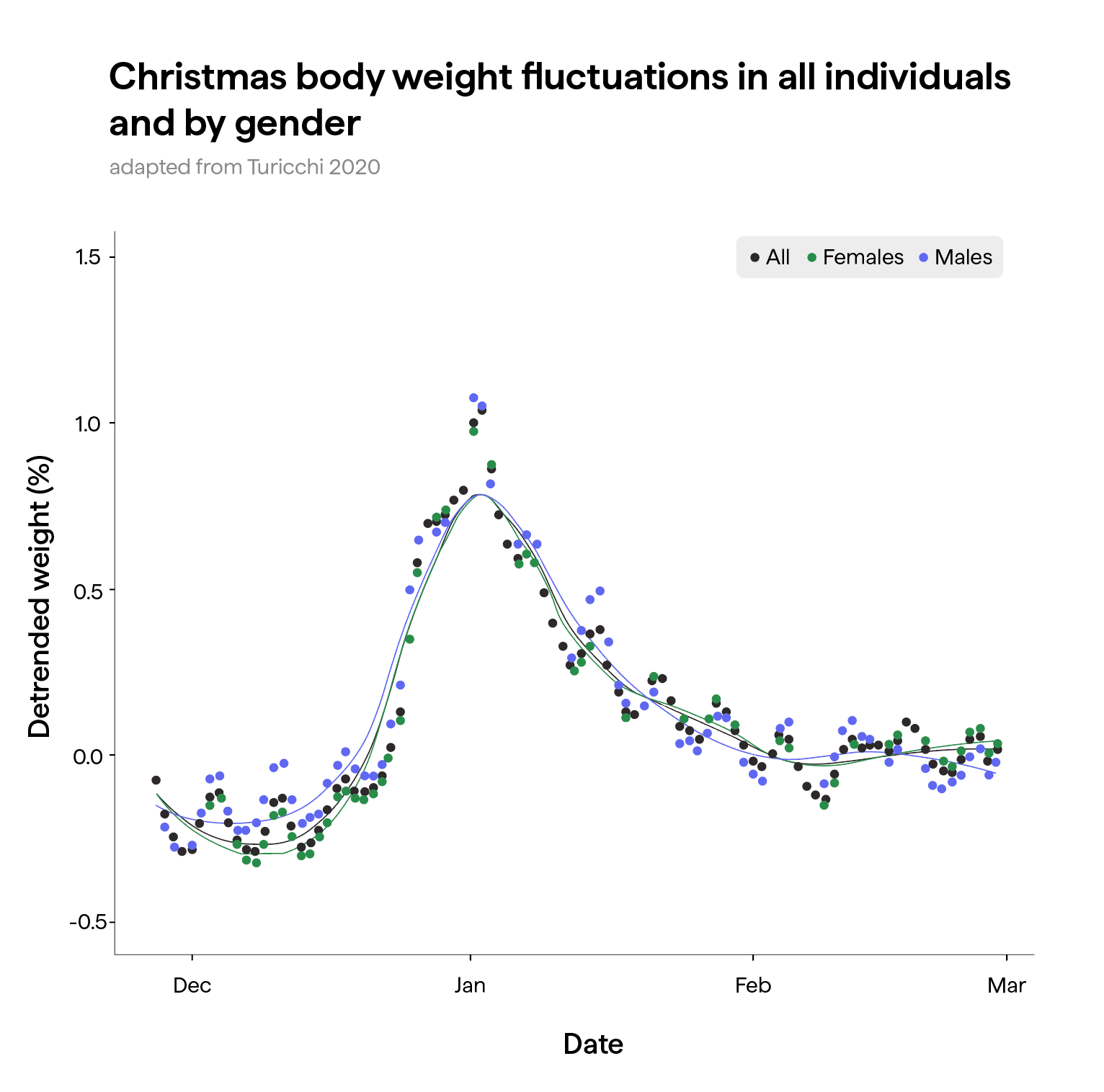
- Turrichi et al. observed an average increase of 1.35% in body weight (~1.1 kg/2.4 lbs) during Christmas, with weight remaining 0.35% higher (0.3 kg/0.6 lbs) than pre-Christmas levels by March.
Relatedly, people also tend to move less and eat more during the colder months.
Multiple systematic reviews across 30+ countries show that physical activity declines in winter.
Now, it’s nothing dramatic––an extra 20 minutes of sedentary time and ~30 mins of reduced light physical activity––but it can make a difference when we consider the concomitant (good word) increase in caloric intake.
For example, a year-long study of 593 adults found that daily caloric intake was 86 kcal/day higher in fall than in spring. The same study also found a decrease in physical activity in the same time period.
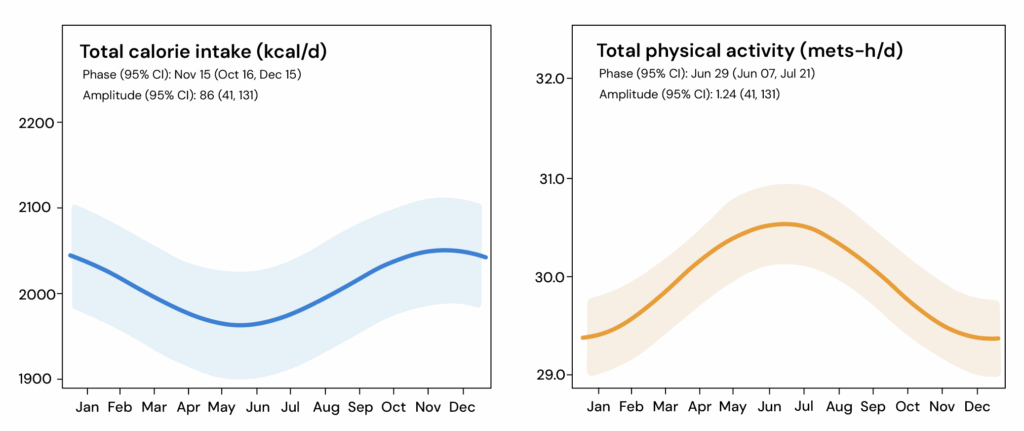
86 extra calories per day might not seem like much, but over a month, that’s an additional 2,600 calories or roughly 0.7 lbs of potential weight gain.
Oh, and remember, this is just the baseline pattern before you factor in holiday parties and family gatherings.
Hold on though
On the surface, it seems that people do gain weight during the holidays, and some of this weight gain tends to hang around long after the holiday season ends.
However, most of the studies mentioned above used participants who aren’t actively pursuing a weight-loss goal or even paying attention to their health and fitness.
So the question is, what happens when people are mindful of their food intake?
A recent systematic review examined the effectiveness of interventions to prevent weight gain during the holiday period.
The interventions included intermittent fasting, self-weighing, mindful eating, and improving self-efficacy.
Overall, studies that included these interventions resulted in an average weight difference of -1.45 kg (3.2 lbs) compared to controls.
The reason these interventions work isn’t just because they help reduce your caloric intake, but also because self-monitoring increases awareness of your behaviours, allowing you to course-correct and adjust future behaviours to prevent further weight gain.
For example, a 2021 study looked at data from ~10,000 smart scale users over three years, and found self-monitoring body weight correlated with weight loss in normal, overweight, and obese individuals.
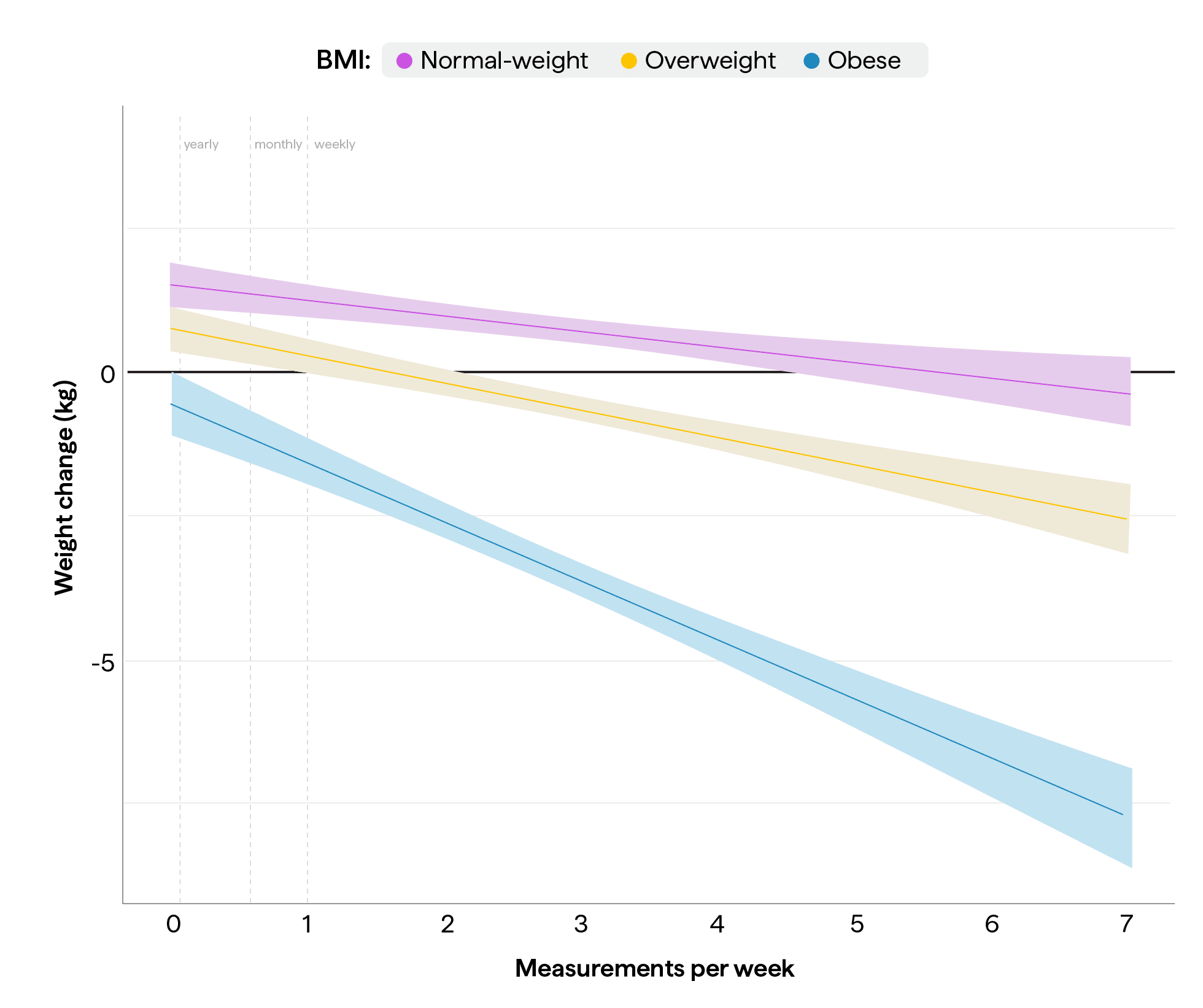
A similar finding was reported by Kaviani et al., who split 111 participants into two groups:
- One group was instructed to weigh themselves daily and maintain their average weight without receiving specific instructions on how to achieve this.
- The other half served as the control group and didn’t self-weigh.
By the end of the study:
- Intervention group
- Overweight/obese participants lost an average of 1.46 kg (± 0.62 kg).
- Normal-weight participants maintained their weight (+0.33 ± 0.27 kg).
- Overweight/obese participants lost an average of 1.46 kg (± 0.62 kg).
- Control Group:
- Gained an average of +2.65 kg (± 0.33 kg) during the holidays, but lost more than half of the weight gain by the end of the study.
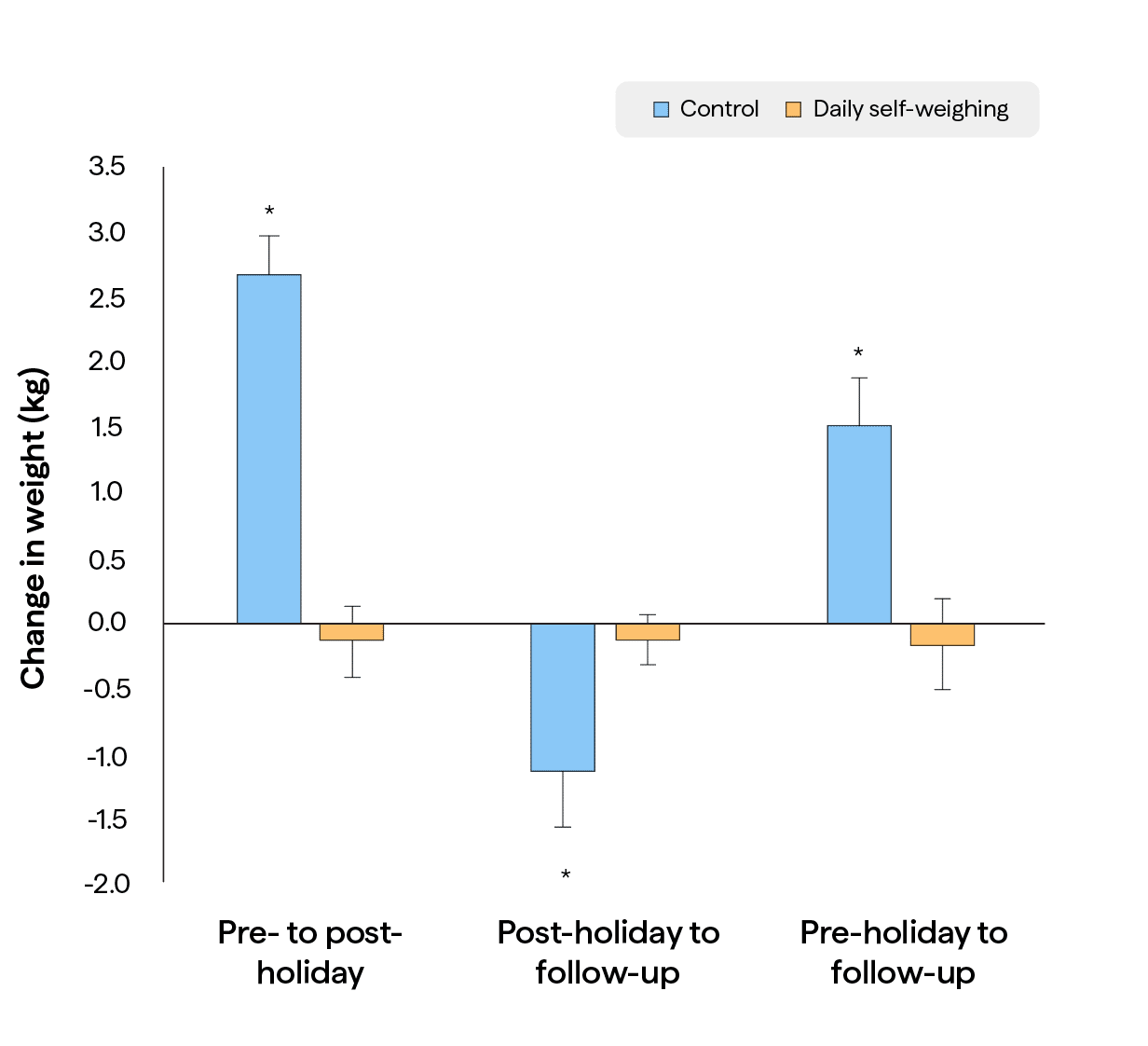
The researchers noted that daily self-weighing helped participants adjust their behaviours in response to weight increases, and the self-monitoring aspect of daily weighing may have motivated them by providing real-time feedback on their weight changes, encouraging them to stick to their goals.
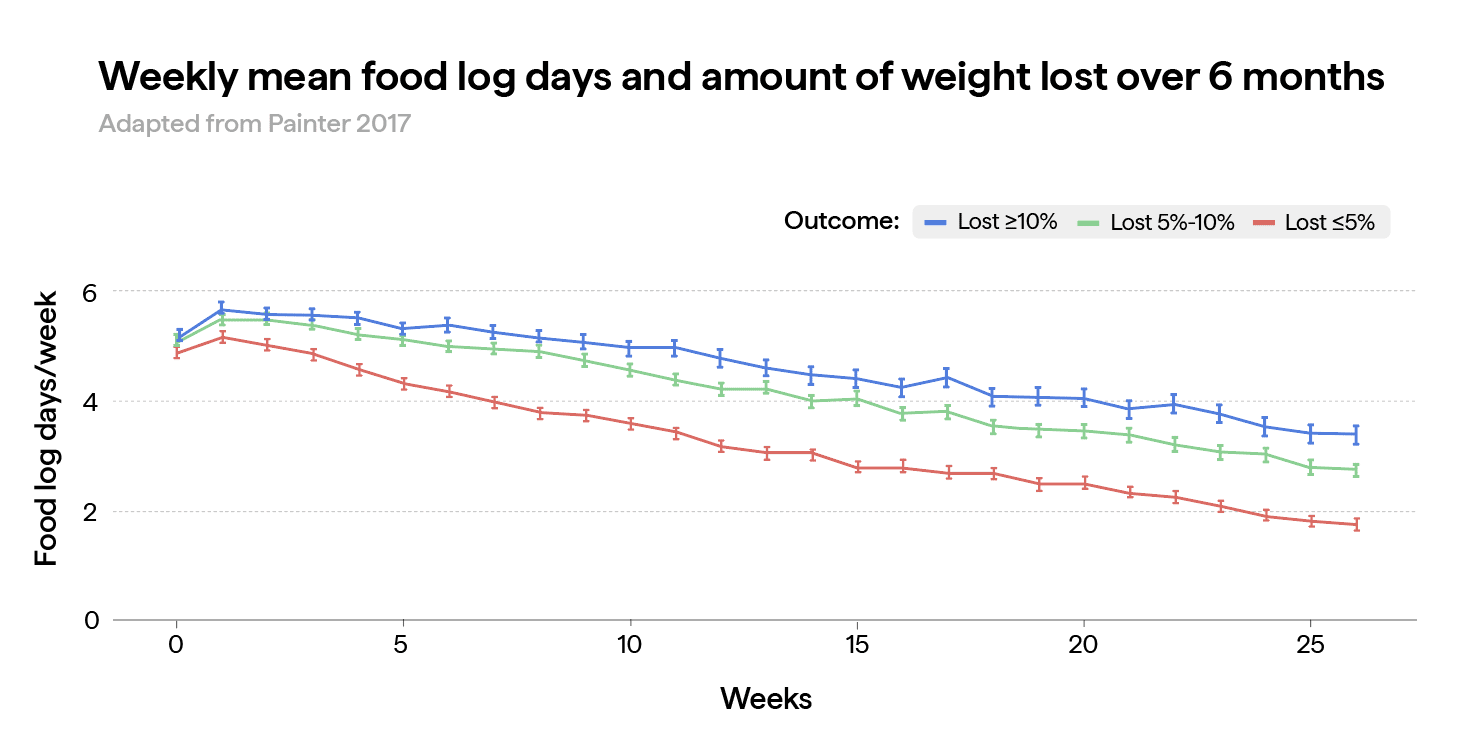
This aligns with findings from Painter et al., who demonstrated that self-monitoring behaviours, including self-weighing, food logging, step counts, and active minutes, are significant predictors of weight loss.
For instance, participants who logged their food intake more than 5 days per week lost twice as much weight as those who logged 1-2 days per week (8.2% vs 4.3%).
Lessons from weight maintainers
If anyone knows how to navigate the holidays while maintaining their progress, it would be a group of people who are successfully maintaining their weight.
Olson et al. investigated strategies employed by members of the National Weight Control Registry (the largest database of individuals who have succeeded at long-term weight loss) to manage their weight during the holiday season.
Out of the 18 strategies, the most popular (>90% of participants reported using one or more of these) were:
- Maintain an exercise routine that you are already doing (91.5% of participants)
- Weigh yourself regularly (90.5%)
- Make choices about which holiday foods are worth eating and skip items that aren′t special or important to you (93.7%)
- Adjust how much you eat during other meals on the days that you have a party or event (91.3%)
- Avoid certain types of food (91.2%)
- Minimise the amount of time you have tempting foods in the house (92.5%)
- Focus on non‐food elements of the holiday season (95.8%)
- Pack healthy snacks while travelling (100%)
While the participants used several strategies, a common thread was planning their strategies in advance, aligning with the Theory of Planned Behaviour: those who intended to use a strategy were far more likely to follow through.
All of this highlights something that seems obvious when you read it but is also seemingly forgotten around this time of year––weight gain isn’t an inevitable reality of the holiday season.
As long as you’re being somewhat mindful of your food intake and trying to stay active in some capacity, you can make it through the next few weeks relatively unscathed.
Finally, remember – you can do whatever you want. But if maintaining your weight—or even making progress—is important to you, then let your actions reflect that.
You don’t need perfect adherence, nor do you need to turn down every social event. As the research above suggests, even being a little mindful of your choices around this time of year can help mitigate unnecessary weight gain.
You should continue training or stay active in some capacity. You probably shouldn’t be a complete asshole with your food intake (just a semi-asshole) because it’s the holidays.
Even if you’re a little bit mindful over the next few weeks, you’ll be in a much better spot come January.
TL;DR
What the research shows:
- Most people gain 1-2 lbs during the holiday season, and that weight tends to stick around long after January
- Physical activity tends to drop around this time of year, which is accompanied by an increase in caloric intake (before accounting for social events)
- People who use self-monitoring strategies either maintain their weight or lose weight during the holidays
Strategies that can help:
- Weigh yourself regularly—this single strategy created a 4 kg difference in one study
- Log your food intake 5+ days per week—people who did this lost twice as much weight as those who logged 1-2 days
- Be selective about indulgences–indulge in foods you’re really looking forward to, and skip the ones you don’t really care about
- Adjust your non-social meals to keep your average caloric intake in check. I personally recommend looking at your 30-day average this time of year. As long as your monthly intake isn’t grossly over where it should be, you’ll be ok.
- Focus on non-food elements of the holidays–there’s so much more to this time of year than just food
- Plan your strategies in advance—you’re more likely to stick to a plan if you have one
Thanks for reading. If you enjoyed this, you’d love the Vitamin

95% of my new content is only being sent to my email list. One email every Thursday, filled with actionable, evidence-based fitness advice to help you with your goals. If you enjoyed this, you’ll love my emails. You can learn more and subscribe for free here.