Electrolyte supplements are everywhere right now, promising better hydration, better workouts, and fewer muscle cramps. But are electrolytes actually worth taking, or are you just paying premium prices for flavoured salt?
Well, let’s find out.
What are electrolytes?
Underneath all the marketing hype and influencers selling neon-coloured drinks to kids, an electrolyte is just a mineral that forms electrically charged ions when dissolved in water or body fluids.
These charged particles play dozens of roles in the body that keep us alive, such as hydration, heart and nerve function, and the maintenance of blood volume and pressure.
So electrolytes are important, but that isn’t really the question we should be asking. The real question is, do you need to supplement with electrolytes for *waves vaguely* all the reasons supplement companies claim? Well, for most people, most of the time, the answer is no.
The first reason is that you already get enough of most electrolytes from a normal, balanced diet.
Take sodium and chloride, for instance, also known as table salt. I don’t think anyone will contest my saying that we’re all consuming more than enough salt.
But just in case there’s any doubt, the World Health Organisation reports the global mean adult intake of sodium in 2019 was 4310 mg per day. That’s the equivalent of two teaspoons of salt. But sure, sell us more salt, supplement companies.
Potassium and magnesium are the two that tend to be below recommended intake values. But this still doesn’t justify an overpriced salt stick.
For example, the recommended intake for potassium is around 3500 mg/day for adults, while magnesium is around 300 mg/day. A typical electrolyte stick contains around 60 mg of magnesium and 200 mg of potassium. Even if you’re below the recommended intake, 60 mg of magnesium doesn’t meaningfully close the gap.
But let’s set that aside and look at four other claims I often see about electrolytes:
- Electrolytes hydrate you better than water
- Electrolytes will improve your workout performance
- An electrolyte imbalance is the cause of your afternoon crash
- Electrolytes can prevent muscle cramps
Let’s dig in.
Do you need electrolyte supplements?
1. Electrolytes hydrate you better than water
The top-selling electrolyte brand in the US sells a product called “Hydration Multiplier,” claiming “faster hydration than water alone.”
And this isn’t exclusive to one brand. Across the electrolyte market, the pitch is some version of: Yeah, water’s alright, but adding our specially formulated blend of salts is so much better for all that effortful office work you’re doing.
But I’d take these claims with a pinch of salt…heh. CUE THE RESEARCH PLEASE.
In a 2016 study, Maughan and colleagues introduced the Beverage Hydration Index–a method for comparing how well different drinks maintain fluid balance over the few hours after drinking them, with plain water used as the reference point.
In the graph below, the drinks tested in the study are listed along the Y-axis, while the X-axis shows each drink’s hydration score relative to water. The orange bar shows the electrolyte drink, which, as you’ll note, had a similar hydrating effect to water.
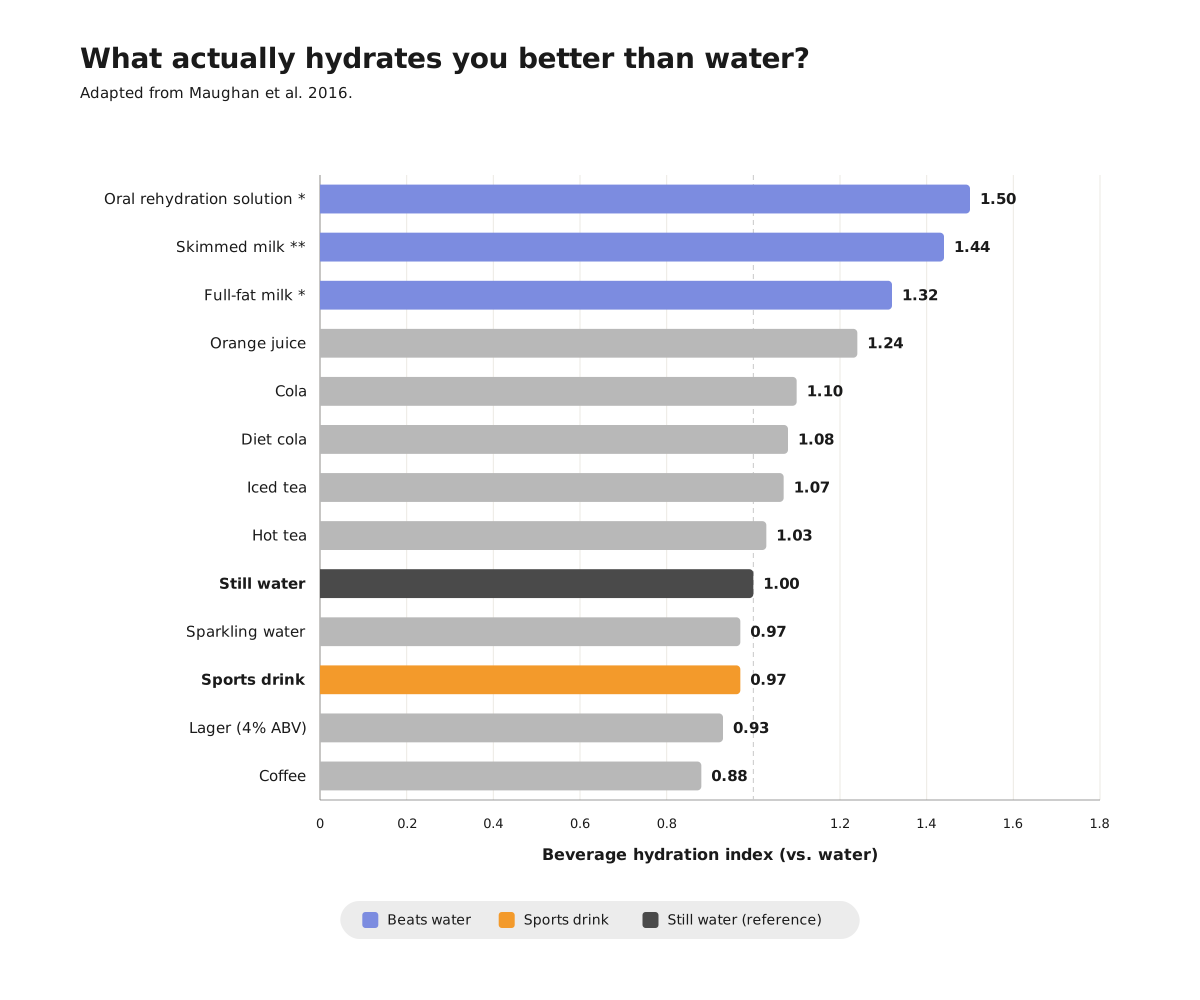
This isn’t a one-off finding, by the way. Other, more recent research also seems to find no real advantage to hydration from electrolyte-containing sports drinks compared with water.
Now, to be honest, the studies I’ve mentioned so far have looked at the effect of electrolytes on hydration when participants were at rest. But what about if you’re physically active? Could electrolytes provide benefits to performance?
2. Can electrolytes improve workout performance?
Of all the claims about electrolytes, this one is probably the most reasonable. After all, you sweat when you exercise, and when you sweat, you lose water and electrolytes.
Sodium is the big one since it helps regulate fluid balance, blood volume, nerve signalling, and muscle contraction. If you’re exercising long enough, especially in hot, humid conditions, significant fluid loss can reduce blood volume, leading to downstream effects on performance. This is where the electrolytes (mostly sodium) come in–they help maintain that fluid balance.
Except in most everyday training contexts, this is a non-issue.
For example, in a large dataset of ~1300 athletes, Barnes et al. reported an average whole-body sweat rate of 1.13 ± 0.58 L/hour, with sport averages ranging from roughly 0.83 L/hour in baseball to 1.51 L/hour in American football.
But performance detriments generally don’t appear until fluid losses exceed roughly 2% of body weight, particularly during prolonged exercise in the heat. That means someone who weighs 80 kg (176 lb) would need to lose roughly 1.6 litres of fluid before reaching that 2% threshold.
Notably, I’m making this comparison against the athlete data from Barnes, so unless you’re an athlete who trains for several hours each day, you’re unlikely to reach a point where this is an issue.
And even then, the actual evidence on sodium is underwhelming. A 2025 review of sodium intake and exercise concluded that no study has shown a benefit from sodium replacement on performance independent of fluid intake. Their recommendation for everyone outside of ultra-endurance sport was “season to taste.”
If you read that last section and thought, “Wait, that doesn’t sound right,” I wouldn’t blame you because it can seem backwards–you lose sodium in sweat, so surely sweating should lower your sodium, right?
Not quite. Sweat contains more water than salt, relative to your blood. So if you sweat but don’t replace the fluid, your blood usually becomes more concentrated rather than more diluted. In other words, sweating alone doesn’t mean you’re suddenly sodium-depleted.
The bigger performance issue usually isn’t sodium. It’s hydration. Lose enough fluid, and performance can suffer. Sodium can help in specific contexts because it supports thirst and fluid retention, but the evidence doesn’t show that sodium improves performance on its own.
3. Electrolytes for your afternoon crash
The pitch is that your afternoon slump and low energy are all signs your electrolytes are running low.
So, what does the research say about this? Well, I don’t know because I couldn’t find a single peer-reviewed study looking at this specific claim. What I did find was research on the impact of hydration on cognition. Specifically, even mild dehydration can impair working memory, mood, and concentration. Although the effect is generally small.
In a meta-analysis by Wittbrodt and Millard-Stafford, which pooled 33 studies, dehydration had a small negative effect on cognitive performance, with an effect size of 0.21 (small but statistically significant), which decreased to 0.14 when body mass loss was below 2%. Said differently, the effect was a smidge over fuck all.
So when your colleague swears their electrolyte supplement fixes their afternoon crash, what they’re really describing is the hydration effect of drinking more water.
If you’re consistently fading by 3pm, you should probably address the factors that could actually be having an effect, like sleep, eating a balanced lunch, movement, and yes, drinking more water.
4. Electrolytes prevent muscle cramps
Fun fact: the whole electrolyte-cramp thing doesn’t come from supplement marketing. The idea itself is over a century old, originating from case reports of people developing cramps while doing hard physical work in hot, humid conditions.
In a 2009 review, Schwellnus notes that these early reports linked cramping to exercise in hot weather, during which individuals sweated heavily. This eventually gave rise to the “electrolyte depletion” theory of exercise-associated muscle cramps (EAMC).
In the same review, Schwellnus points out some flaws in this idea. For example, if cramping was due to low electrolytes, then why do athletes cramp despite normal hydration and electrolyte levels? Further, electrolyte depletion is a whole-body problem, whereas cramping is localised. You might experience a calf cramp during a run or your hamstring might peace out during a football game.
When looking across the research, muscle cramps aren’t caused by a single thing. Fatigue, exercise intensity, heat, previous injury, and individual susceptibility all seem to play a role. 1
What about potassium and magnesium?
Most of this response has centred on sodium. But what about the other two ingredients in electrolyte supplements? Thankfully, there isn’t that much to discuss here, so we can get through this bit pretty quickly.
The evidence for potassium is mixed. Reviews note that while potassium may theoretically support intracellular hydration, studies haven’t found a clear benefit when sodium is already accounted for. Furthermore, exercise intensity has minimal effect on potassium losses.
Magnesium is important for muscle and nerve function, but it contributes minimally to hydration, and there’s no good evidence that it prevents exercise-associated cramps.
One last thing
I want to be clear that I’m not saying electrolytes are pointless. For instance, they can be great for people on a ketogenic diet, or psychopaths individuals engaging in ultra-endurance events. Hell, it doesn’t even need to be that deep–maybe you just like the taste, and if adding electrolytes helps you drink more water, knock yourself out.
But to bring this back and answer the question directly: For most people, most of the time, no–electrolyte supplements aren’t worth taking.
Thanks for reading. If you enjoyed this, you’d love the Vitamin
95% of my new content is only sent to my email list. One email every Thursday, filled with actionable, evidence-based fitness advice to help you with your goals. If you enjoyed this, you’ll love my emails.
Subscribe for free below or Learn more about the Vitamin