After years of cutting, rebounding, and redoing the same diet, Joe finally figured out what it takes to make progress that actually lasts. Read his case study to see how he did it.
Joe’s a 37-year-old dad who isn’t new to this whole fat loss thing. As Joe put it in his coaching application, “I’ve lost and gained weight over the years, and I’m tired of ruining my progress. It’s exhausting. I know I can be a better version of my current self, in multiple areas of my life.”
But Joe’s battle with fat loss wasn’t just a physical one.
“There was a certain level of stress and pressure of what others might think about me failing to maintain my weight. It was probably more of a mental deal than anything, but it’s something I stressed about too much when my weight would yo-yo,” Joe said.
What led Joe to coaching?
Joe was initially skeptical about coaching. He’d seen the progress his best friend, Patrick, was making under my guidance, but he was hesitant.
“I didn’t want to spend the money, and I thought I could do it on my own because I knew the general process, evidenced by my success in losing weight previously.”
But, as Joe went on to explain, “After multiple failures, I knew that the missing piece was coaching. I needed someone who could take the guesswork out of calorie and macro targets, workouts, diet breaks, maintenance, etc.”
The setup
At the start of coaching, Joe weighed 180 lbs with a 37” waist (81.6 kg/94 cm) at 5’8.”
To kick things off, we set the initial goal of losing 20 lbs. Based on a weekly weight loss rate of 0.5-0.7% bw/week, Joe would reach this goal within 4-5 months and start seeing noticeable changes in his body composition. But, more importantly, it gave us a tangible goal to work towards.
This is what Joe’s starting macros looked like:
- Calories: 2100-2300
- Protein: 120-140g
- Fiber: 20-30g
🍎 You can download the free diet generator that will help you set your own nutrition targets here.
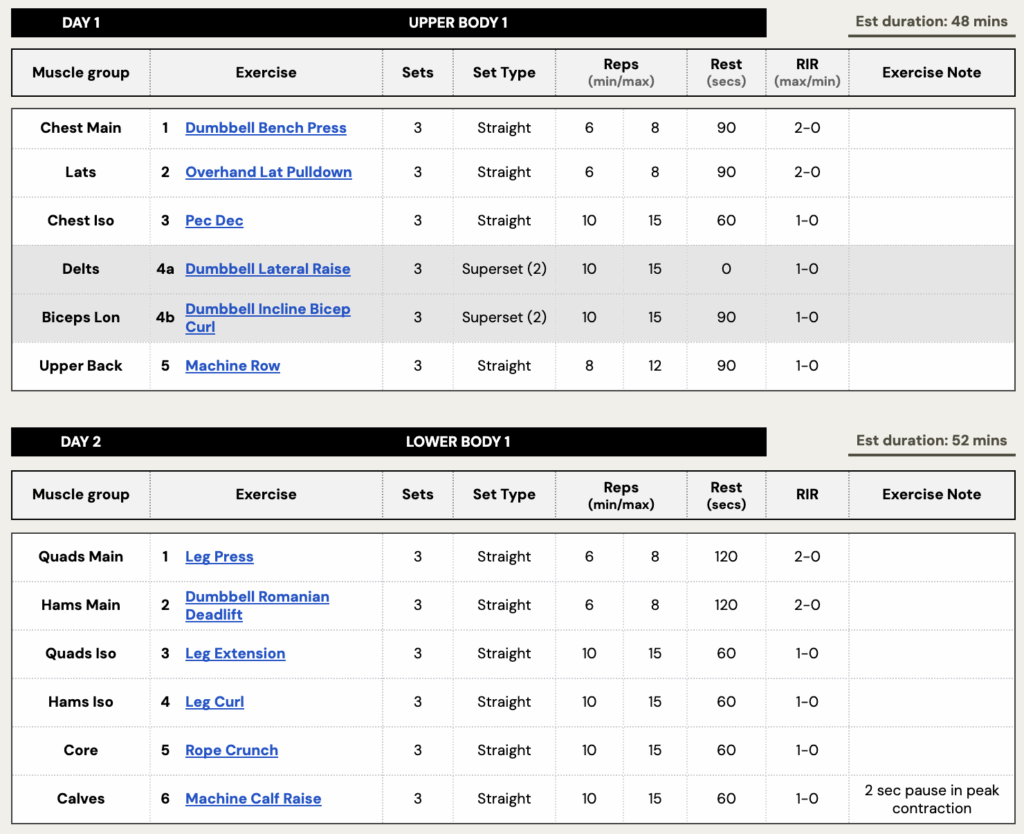
As for Joe’s training, he preferred a simple upper/lower split and could train four times a week. Joe noted that his “butt had pancaked” when he’d previously cut, and wanted to get that shape back. So the program was designed with that in mind, with the second lower-body day focusing on glutes. This is what Joe’s program looked like over the week:
- Day 1: Upper body with a chest and lat focus
- Day 2: Lower body with a quad and ham focus
- Day 3: Upper body with a shoulder and upper back focus
- Day 4: Lower body with a glute and ham focus
The image below shows two training days from Joe’s initial program. Note – his program was continually changed over the course of coaching.
Joe’s results
Over the course of 11 months, Joe’s lost 36 lbs (16 kg), averaging around 0.5% of total bw/week.

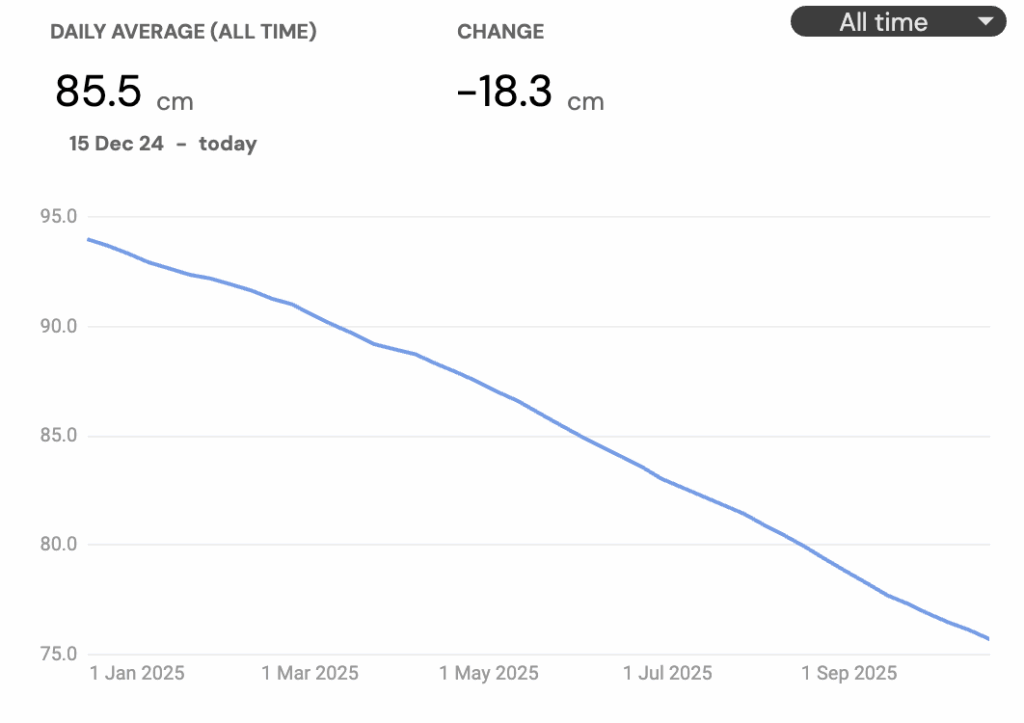
And reduced his waist by 18cm (7 inches), bringing his waist-to-height ratio down from 0.55 to 0.44 — a huge shift toward better metabolic health.
Oh, and he had to buy an entirely new wardrobe. So, uh, my bad, I guess.
When I asked Joe what he learned throughout this process, he said:
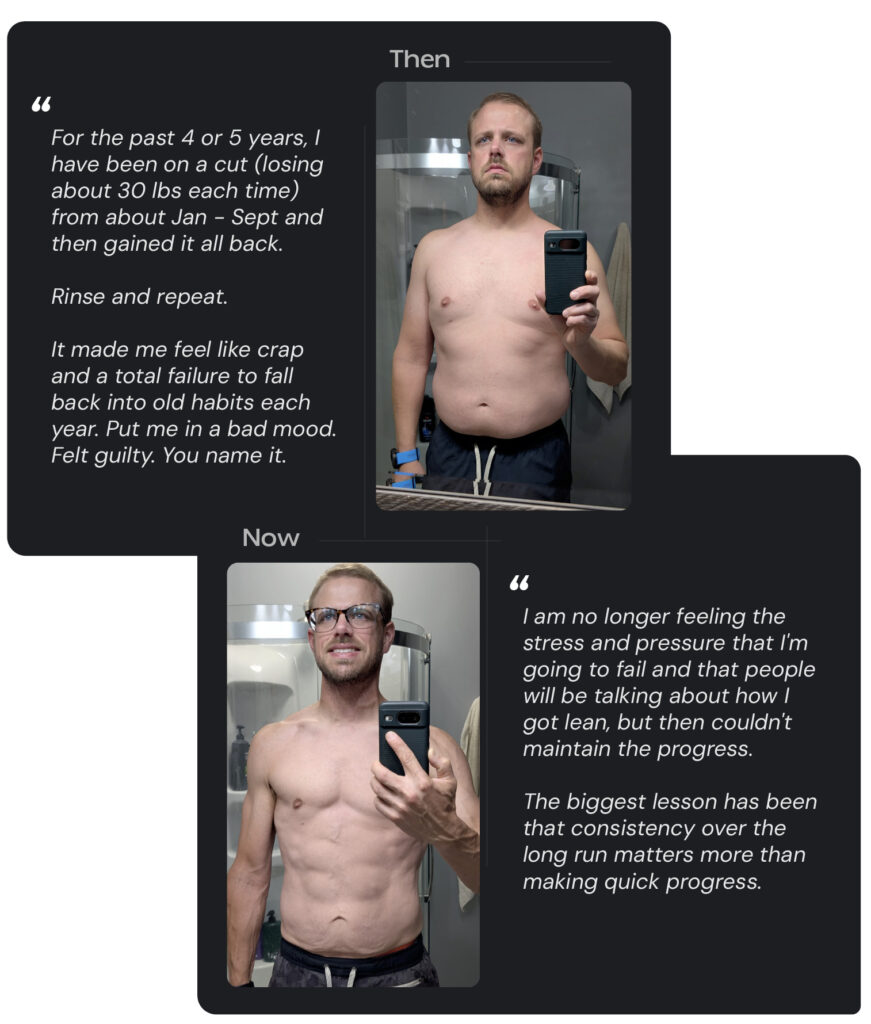
“The biggest thing I learned after working with Aadam was that I can’t do it alone. I need help from a coach if I want to achieve my goals. Also, that consistency over the long run matters more than making quick progress.”
What made the coaching work so well for Joe was the fact that he wasn’t trying to figure everything out himself while simultaneously executing the plan. He wasn’t second-guessing his calorie target on Tuesday, Googling “best glute exercises” on Thursday, and panicking about scale fluctuations on Saturday. He had someone handling the thinking so he could focus on the doing.
“Aadam provided calories, macros, and a workout plan. He’s adjusted everything as needed for me, so I don’t have to guess or stress. It takes so much off my plate to know I can just trust the process, and I will see success! Plus, he explains the reasoning behind changes he makes to my plan and why a weekly average weight or measurement might not be where I expect it to be based on weekly adherence.”
Avoiding past mistakes
As Joe approached the 150 lb mark, he sent me an email:
“In past years that I’ve been on a cut, typically I start around New Year’s and get down to 150s in the fall. Then my hunger levels seem to elevate, and I end up gaining back the 30 lbs by New Year’s. Rinse and repeat. So this is kinda a pivotal moment for me, I guess.”
But Joe broke past 150 lbs. Then 145 lbs. And as of writing this, he’s at 142 lbs. And while there has been some hunger, it’s been manageable.
The difference this time around was the approach. I didn’t randomly cut his calories just because his progress ostensibly slowed down for a week or two. Instead, we stayed the course and looked at all the data points.
If Joe’s weight loss slowed down, were we seeing reductions in his waist measurements? Were there visible changes in his progress photos? If either answer was yes, then things were working—no adjustments needed.
I was also fine with his rate of loss occasionally dropping below the 0.5-0.7% target as long as we were seeing progress elsewhere. Take a look at the chart below showing Joe’s weekly weight loss as a percentage of body weight over the last three months.
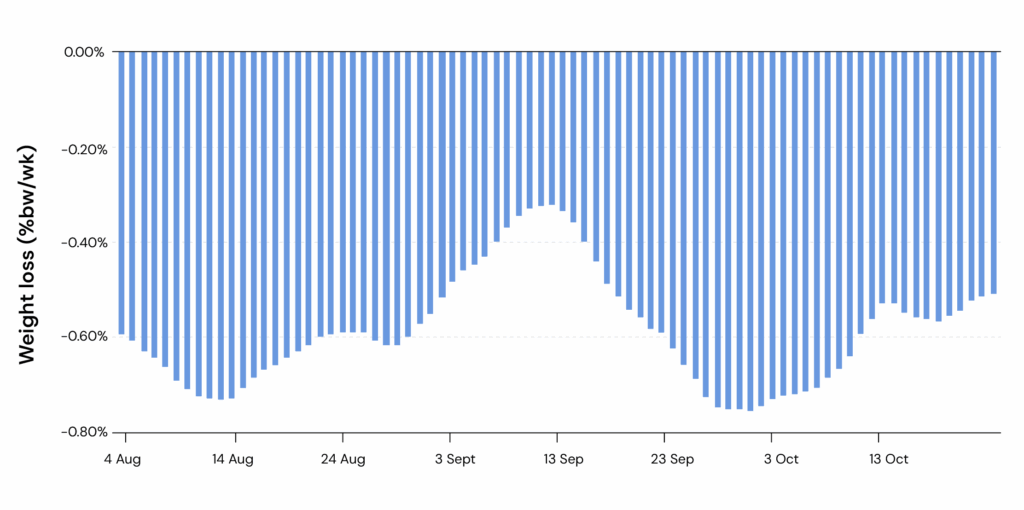
You can see there are weeks where his rate of loss dips below the 0.5% target, but then it speeds up again. There are some weeks when he even exceeded the higher end of his target range.
Often, the best change you can make is no change at all. Sometimes you just need to let your body do its thing. But this also shows why tracking multiple data points matters—the more reference points you have, the more confident you can be that you’re on track, even when one metric looks off.
The bigger lesson
Many of you feel disheartened about your progress because you don’t realise how much time a transformation like Joe’s takes. All you see is a before and after photo–two snapshots in time that aren’t representative of the entire process–compare it to your own progress, and proceed to feel like shit.
But take a look at the image below showcasing Joe’s progress photos spanning the eleven months of coaching so far. What do you notice?
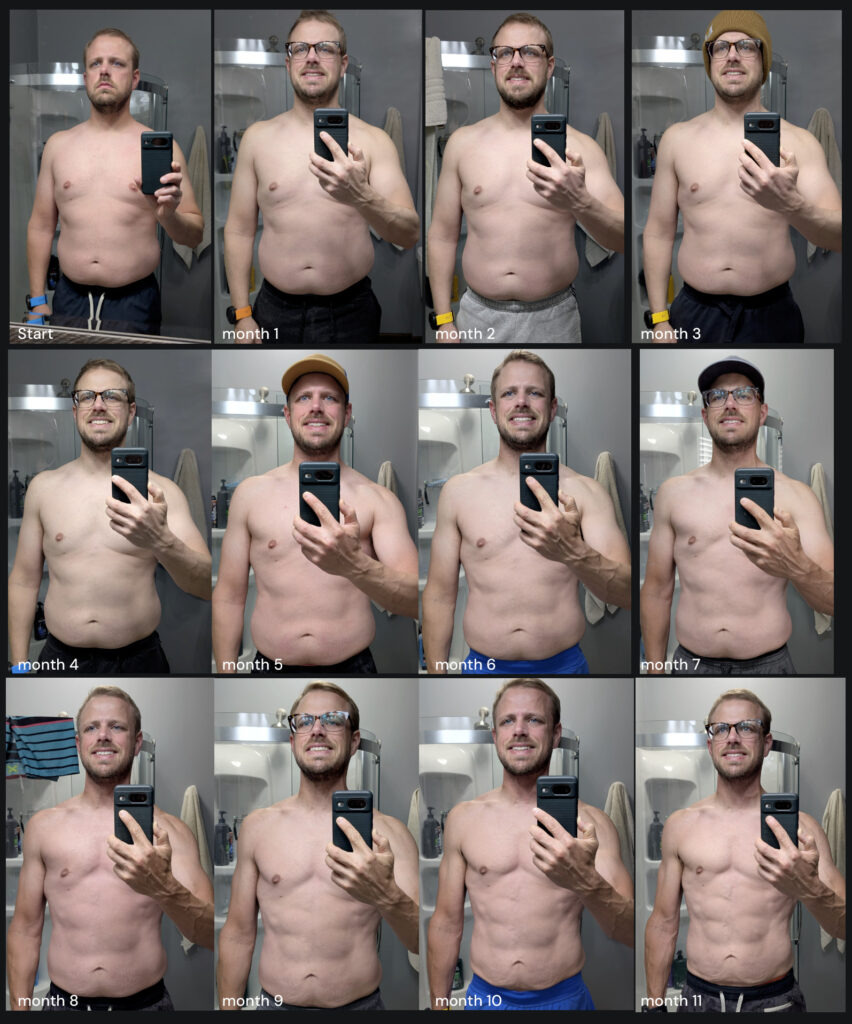
While Joe made steady progress during this time, it’s only in the last three months that you really see a striking change in his body composition.
And here’s the crazy part: Joe’s tracked his nutrition every single day with damn near perfect adherence to his calorie and macro targets.
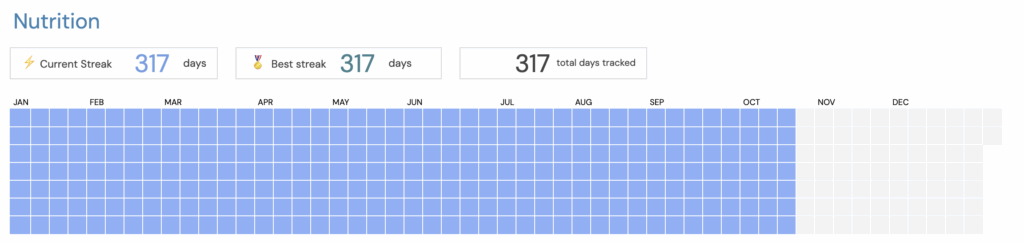
He’s only missed two workouts (because he was sick), and averaged ~13,000 steps each day.
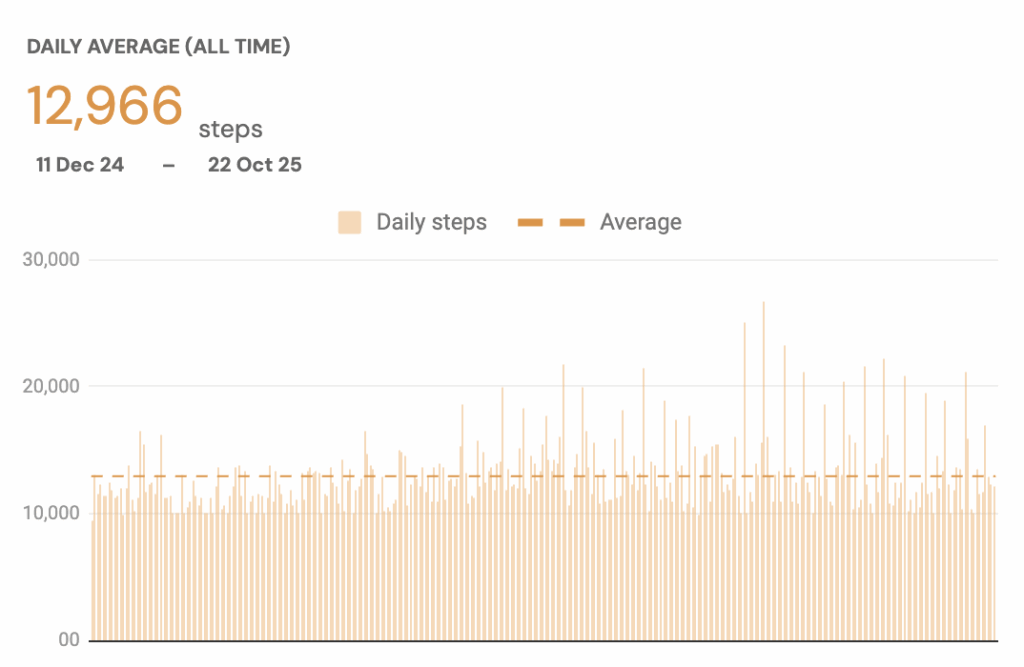
Despite that, it still took Joe eleven months to get to this point. Let that sink in. Yet, you get pissed off when you’ve “kind of” committed to your goal and haven’t seen progress after a few weeks. Imagine if Joe had quit at any point before the last three months.
Progress takes time. It doesn’t matter how good the coach is or how dedicated you are – you can’t hack physiology. Your body will change when it wants to, not when you want it to. The only thing you can control is showing up every day, being consistent, and giving it time. Until you internalise this, you’re going to end up like Joe pre-coaching.
Looking ahead
Joe has a few more weeks left on this cut, and then he’ll spend the rest of the year at maintenance so he can enjoy Christmas and continue building the healthy habits to maintain his progress.
Then we’ll kick off the new year with a focused 6-8 month muscle-building phase to add size and strength.
The sales pitch
Hold on — hey, Joe, I’m doing that whole selling thing. Can you give me an assist? What would you say to someone who’s on the fence about coaching?
“In my best Shia LaBeouf voice, ‘DO IT!’ It will literally be the best money you’ve spent on your health/fitness, and you’ll save yourself a lot of time and frustration.
“If I had signed up for coaching five years ago, I wouldn’t have been on a cut for nine months of the year since 2021. Plus, I would have been a lot happier over that time period (and my wife too as she’s tired of me constantly dieting! 😂).”
Learn more about coaching and apply here.
Joe’s story isn’t about learning something completely new—it’s about finally having the support and structure to apply what he already knew, consistently. Sometimes the missing ingredient isn’t more knowledge; it’s having someone help you take what you know and apply it effectively.
Thanks for reading. If you enjoyed this, you’d love the Vitamin
95% of my new content is only sent to my email list. One email every Thursday, filled with actionable, evidence-based fitness advice to help you with your goals. If you enjoyed this, you’ll love my emails.
Subscribe for free below or Learn more about the Vitamin